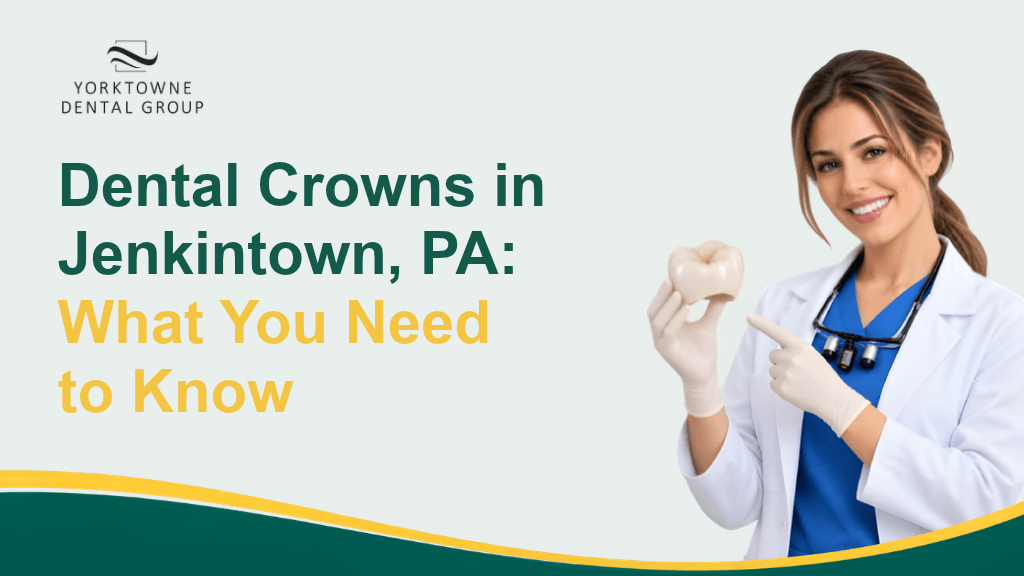
Dental Crowns in Jenkintown, PA: What You Need to Know
Dental Crowns in Jenkintown, PA restore damaged teeth, compare crown materials with veneers, and protect your smile with proper daily care.
Dental Crowns cover a weakened, cracked, worn, or heavily decayed tooth to restore chewing function plus overall comfort. Treatment depends on your remaining tooth structure, bite, gum health, and personal goals.
Restoring damaged teeth affects daily function, chewing comfort, and smile confidence. Understanding your options helps you make informed decisions about preserving long-term oral health.
For patients considering Dental Crowns in Elkins Park, Jenkintown, proper evaluation guides treatment planning. Yorktowne Dental Group assesses your tooth structure to explain why a crown is needed, recommend suitable materials, and discuss care steps.
How do Dental Crowns protect a damaged tooth?
Dental Crowns encase the visible portion of a weak or damaged tooth to shield remaining natural structures from daily chewing pressure. This protective coverage restores full biting function while effectively preventing further structural deterioration.
The dentist carefully removes decay or compromised structure and reshapes the tooth to ensure a precise, comfortable fit. When essential natural tooth structure is missing, a foundational core buildup is placed to support and stabilize the restoration properly.
For patients seeking a Dental Crowns Procedure in Jenkintown, Pennsylvania, understanding timing helps prepare for care. The process involves tooth preparation, impressions, temporary coverage, plus final placement.
What Problems can Dental Crowns fix?
Patients considering Dental Crowns in Pennsylvania often seek solutions for structural tooth damage. Understanding available options helps patients choose appropriate care for their needs.
Common Crowns Applications
- Structural Repair: General Dentistry fixes large cavities, cracks, or severe wear.
- Cosmetic Care: Cosmetic Dentistry complements restorations for a uniform smile.
- Alternatives: Fillings, inlays, or onlays treat minor tooth damage**.**
- Timely Care: Preventive Dentistry provides early evaluation before pain starts.
Candidacy for Restorative Care
- Tooth Support: Restorative care applies when healthy tooth structure remains.
- Oral Assessment: Dentists check gums, bite alignment, and active infection.
- Symptom Relief: Relieves chewing discomfort, weakness, or decay.
- Daily Care: Proper hygiene ensures long-term stability.
Early intervention preserves natural tooth structure and prevents further damage. Consulting a dental professional ensures a personalized treatment plan tailored to your needs. Prompt care restores full chewing function and confidence in your smile.
How Many Types of Dental Crowns are Available?
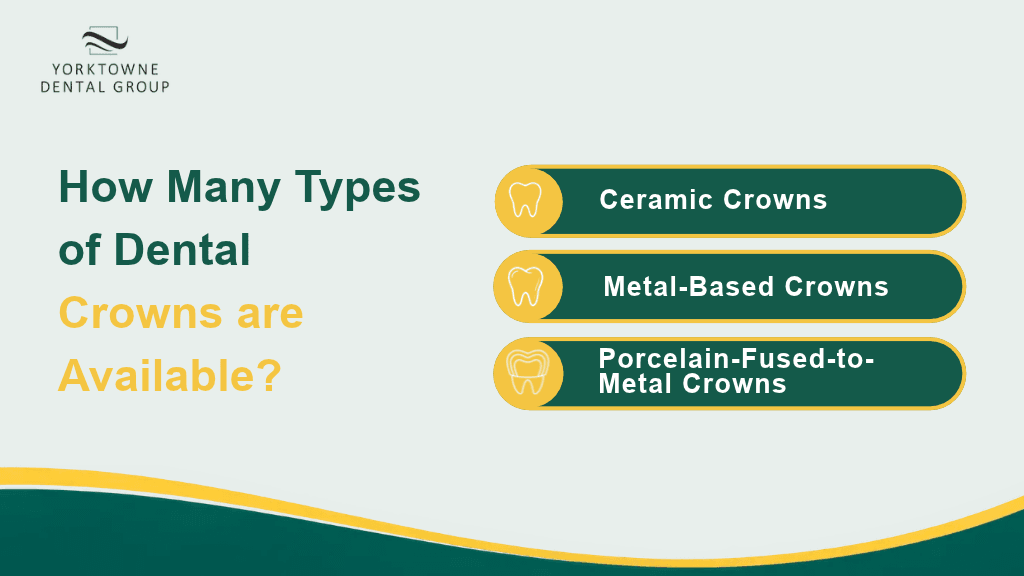
Dental Crowns come in several materials tailored to tooth location, chewing forces, plus cosmetic goals. A comprehensive evaluation provides the broader guidance needed before selecting an ideal restoration.
1. Ceramic Crowns
- Provides a natural, tooth-like appearance ideal for visible front teeth.
- Offers optimal translucency plus precise shade matching following Teeth Whitening Treatment.
2. Metal-Based Crowns
- Handles heavy chewing forces on back teeth with exceptional long-term durability.
- Resists wear caused by daily biting pressure, clenching, or grinding.
3. Porcelain-Fused-to-Metal Crowns
- Combines natural porcelain appearance with strong underlying metal support.
- Delivers reliable strength plus aesthetic appeal across different tooth locations.
Patients evaluating Pros and Cons of Dental Crowns in Jenkintown, Pennsylvania should consider appearance, durability, plus bite forces. When teeth remain structurally sound, Dental Veneers may serve as an alternative.
What is the Difference between Dental Crowns and Dental veneers?
Veneers mainly cover the front tooth surface for aesthetics, whereas Dental Crowns enclose the entire visible tooth to restore structural strength. Cosmetic Dentistry helps patients evaluate whether conservative or full-coverage restorations best suit their goals.
- Veneers cover front surfaces to treat discoloration, gaps, or chips.
- They encase whole teeth weakened by decay or fractures.
- Treatment depends on remaining healthy tooth structure.
- Structural damage requires restorative care before cosmetic treatment.
- Veneers require minimal enamel removal compared to crown preparation.
- Crowns withstand heavy chewing forces, while veneers focus on front aesthetics.
- Regular dental maintenance ensures long-term stability for both options.
Dental Crowns vs Dental Veneers
| Dental Crowns | Dental Veneers |
|---|---|
| Cover the entire tooth | Cover the front surface |
| Restore damaged teeth | Improve tooth appearance |
| Provide structural support | Correct minor cosmetic flaws |
| Require more tooth preparation | Usually require less preparation |
| Made from porcelain or zirconia | Made from porcelain or composite |
| Used for weakened teeth | Used for stains, chips, or gaps |
Which Foods can affect Dental Crowns?
Following proper care after placing Dental Crowns protects your restoration and maintains oral comfort. Preventive Dentistry supports long-term care, while Sedation Dentistry helps anxious patients complete treatment comfortably.
Foods to Avoid
- Sticky Candy: Can pull, loosen, or dislodge temporary and final restorations.
- Ice and Kernels: Exerts severe pressure that risks chipping or cracking crowns.
- Very Hard Nuts: Places unnecessary stress on the underlying tooth structure.
- Hard Candies: Concentrated pressure risks fracturing restoration surfaces.
- Hard Objects: Biting non-food items damages protective surface coverage.
Habits to Follow
- Daily Hygiene: Brush twice daily with fluoride toothpaste and clean between teeth.
- Wear Night Guards: Protect restorations from night grinding or clenching forces.
- Avoid Tools Use: Never open packages or bite pens with restored teeth.
- Routine Visits: Schedule regular dental checkups to monitor crown stability.
- Balanced Diet: Limit sugary snacks to protect the underlying natural tooth structure.
Patients should contact the office if a restoration feels loose, chips, or causes pain. Exploring the Benefits of Dental Crowns in Jenkintown, Pennsylvania emphasizes brushing, flossing, plus regular visits for lasting success.
Key Facts About Dental Crowns
| Feature | Details |
|---|---|
| Purpose | Protect damaged teeth |
| Coverage | Covers the entire tooth |
| Materials | Porcelain, zirconia, or metal |
| Common Uses | Cracked, weak, or worn teeth |
| Appearance | Can match natural teeth |
| Durability | Can last many years |
| Procedure | Requires tooth preparation |
| Maintenance | Regular brushing and flossing |
Why Choose Yorktowne Dental Group for Dental Crowns?
Treatment with Dental Crowns starts with a detailed evaluation rather than a one-size-fits-all recommendation. The team considers the tooth, gums, bite, existing dental work, and your goals before explaining treatment options.
During consultations, patients discuss comfort concerns and treatment options openly. The dental team focuses on patient comfort while explaining care requirements clearly so you can understand what to expect and proceed with confidence.
Yorktowne Dental Group offers comprehensive restorative, cosmetic, preventive, and sedation care. Dr. Yongkun Kim, Dr. Medha Patel, and Dr. John Fadel help determine whether a crown fits your individual goals.
Conclusion
Dental Crowns protect a weakened tooth, restore chewing function, and improve appearance when the remaining tooth structure can support treatment. Achieving lasting results depends on a precise fit, a suitable material selection, and consistent oral care.
The right treatment plan begins with a comprehensive examination. An evaluation allows your dentist to assess your tooth, explain available options, and create a personalized plan tailored to your oral health and smile goals.
Choose Yorktowne Dental Group for personalized Dental Crowns care. Book Your Consultation with our team to discuss your treatment options. Contact us today to schedule your evaluation and take the next step toward restoring your smile.
Frequently Asked Questions
1. How long do crowns usually last?
Many crowns last about five to 15 years, but lifespan varies with material, bite, hygiene, habits, and the supporting tooth.
2. Is getting a crown painful?
Local anesthesia keeps the tooth numb during preparation. Some sensitivity or gum tenderness can occur afterward and often improves with time.
3. Can you whiten a crown?
Whitening changes natural tooth colour but does not bleach an existing crown. Plan the shade before a new crown is made.
4. Can a crown fall off?
A crown can loosen or become dislodged. Contact your dentist for evaluation rather than trying to reattach it at home.
5. What should I do if my crown feels too high?
Contact your dental office. Your dentist can check your bite and make a professional adjustment when needed.