Emergency Dentistry in Jenkintown, Pennsylvania: Urgent Care Guide
Emergency Dentistry is needed for tooth pain, broken teeth, swelling, infection, and trauma, plus urgent care steps and treatment options.
Emergency Dentistry provides an effective way to address severe oral health issues while protecting your natural teeth and overall wellness. Proper care helps relieve severe tooth pain, broken teeth, sudden swelling, and oral trauma, making it a vital solution for long-term oral health.
If you are considering this treatment for the first time, you may have questions about the evaluation, emergency relief procedures, overall benefits, and custom care options. Understanding the process can help you feel more comfortable with your care.
For patients seeking Emergency Dentistry in Elkins Park, Jenkintown, Pennsylvania , learning about treatment options makes it easier to discuss your needs with your dentist. Yorktowne Dental Group helps patients understand their options through this guide explaining the procedure, benefits, recommendations, and aftercare.
What Is Considered Emergency Dentistry?
Emergency Dentistry services at Yorktowne Dental Group provide prompt professional care for dental problems that require immediate attention. These services can help patients receive timely guidance for urgent dental concerns.
Severe tooth pain, significant swelling, dental trauma, uncontrolled bleeding, or a knockedout tooth may require prompt professional care. Timely treatment can help address the problem and reduce the risk of further complications.
Seeking Emergency Dentistry quickly can help protect your oral health and prevent additional damage. A professional evaluation can determine the appropriate treatment based on the type and severity of the dental emergency.
Common Emergency Dentistry Situations That Require Prompt Care
1. Severe or Persistent Tooth Pain
-
Possible Signs of an Underlying Problem: Severe tooth pain may be related to decay, infection, gum problems, dental trauma, or inflammation inside the tooth.
-
Seek Prompt Professional Care: Persistent or severe pain should be evaluated by an Emergency Dentist in Jenkintown, PA rather than ignored.
2. A Broken, Cracked, or Damaged Tooth
-
Protect the Damaged Tooth: A tooth may crack or break after biting something hard or experiencing an accident.
-
Take Immediate Precautions : Rinse gently, apply a cold compress if swelling occurs, and seek Emergency Dental Care in Jenkintown, Pennsylvania .
3. A Knocked-Out Permanent Tooth
-
Handle the Tooth Carefully: Hold the tooth by the crown rather than the root.
-
● Keep the Tooth Moist: Seek an Emergency Dentist as quickly as possible for professional instructions.
4. Dental Abscess or Signs of Infection
-
Watch for Serious Symptoms: Severe throbbing pain, swelling, fever, sensitivity,
-
or a foul taste may indicate infection.
-
Do Not Ignore the Infection: Understanding tooth abscess symptoms can help patients recognize when prompt care is necessary. Difficulty breathing or swallowing requires immediate medical attention.
5. Lost Filling or Crown
-
Protect the Exposed Tooth: A lost filling or crown can cause discomfort and expose sensitive areas.
-
Avoid Further Damage: Avoid chewing on the affected side until you receive professional guidance.
Emergency Dentistry Quick Guide:
| Dental Emergency | What to Do |
|---|---|
| Severe Toothache | Seek promptEmergency<br>Dentistrycare. |
| Broken Tooth | Rinse your mouth and contact a<br>dentist. |
| Knocked-Out Tooth | Keep the tooth moist and seek<br>immediate care. |
What Should You Do During an Emergency Dentistry Situation?
During a dental emergency, staying calm and taking appropriate steps can help protect the affected area. Prompt Emergency Dentistry can provide professional guidance, and Yorktowne Dental Group offers appropriate dental care for urgent concerns.
Step 1: Contact an Emergency Dentist
-
Explain Your Symptoms Clearly: Tell the dental team whether you are
-
experiencing pain, swelling, bleeding, a broken tooth, or another urgent problem.
-
Follow Professional Guidance: Accurate details can help the team guide you before your appointment.
Step 2: Protect the Affected Area
-
Rinse Your Mouth Gently: Use clean or warm water to remove debris.
-
Apply a Cold Compress: A cold compress may help reduce swelling and discomfort.
Step 3: Take Care of a Damaged Tooth
-
Save Broken Tooth Fragments when possible.
-
Keep a Knocked-Out Tooth Moist while seeking immediate professional care.
What Treatments May Be Provided During an Emergency Visit?
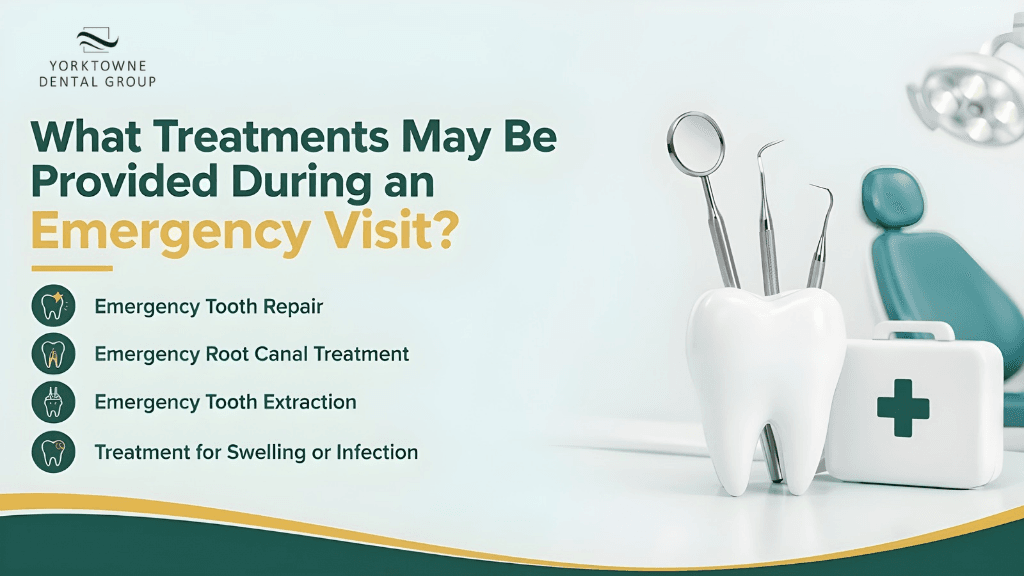
The treatment you receive depends on the cause and severity of the dental emergency. After examining the affected area, your dentist may recommend Emergency Dentistry options tailored to your specific needs.
1. Emergency Tooth Repair
A chipped, cracked, or damaged tooth may require restorative treatment such as a filling, bonding procedure, or crown. Emergency Dentistry may include restorative care when prompt treatment is needed.
2. Emergency Root Canal Treatment
If infection or inflammation affects the dental pulp, root canal treatment may help remove damaged tissue and protect the remaining tooth.
3. Emergency Tooth Extraction
When a tooth is severely damaged and cannot be restored, oral surgery and tooth extraction may be recommended based on the dentist’s evaluation.
4. Treatment for Swelling or Infection
Your dentist will evaluate the source of swelling or infection and recommend appropriate treatment. Advanced dental technology can also help evaluate concerns and plan treatment.
When Should You Seek Emergency Medical Care Instead of Emergency Dentistry?
Most dental problems can be treated through Emergency Dentistry , but some serious symptoms require immediate medical attention.
Difficulty Breathing or Swallowing
-
Seek emergency medical care immediately.
-
Do not wait for a dental appointment.
Severe Swelling or Bleeding
-
Severe facial or neck swelling requires urgent evaluation.
-
Uncontrolled bleeding or serious facial injuries need immediate care.
While Emergency Dentistry helps with many urgent dental problems, severe symptoms may require hospital care. Learn more about tooth abscess symptoms and complications to understand when immediate medical attention may be necessary.
Emergency Dentistry for Kids
Children can experience dental emergencies because of falls, sports injuries, or sudden tooth pain. Emergency Dentistry for Kids can help parents seek appropriate professional care.
Different Types of Dental Injuries
-
Injuries may involve baby teeth or permanent teeth.
-
Treatment can depend on the child’s age and dental development.
Seek Professional Care
-
Avoid forcing a damaged tooth back into position.
-
Contact a dentist for appropriate guidance and treatment.
For more information about Emergency Dental Care for Children , parents can review trusted guidance and discuss Pediatric Emergency Dentistry options with their dentist.
How Can Emergency Dentistry Help Prevent Future Dental Emergencies?
-
Brush regularly and clean between your teeth to maintain good oral health.
-
Wear a mouthguard during sports and avoid chewing hard objects that may damage your teeth.
-
Schedule regular visits for comprehensive dental services to help identify potential problems early.
-
Maintaining good oral health may help reduce the need for Emergency Dentistry in some situations.
Conclusion
Dental emergencies can happen unexpectedly, but knowing when to seek professional help through Emergency Dentistry can protect your oral health. Severe tooth pain, broken teeth, knocked-out teeth, infections, and significant swelling should never be ignored.
Seeking prompt dental care can help you receive appropriate treatment for urgent concerns. If you are looking for Emergency Dentistry in Jenkintown , Yorktowne Dental Group can provide professional guidance and prompt care based on your individual needs.
Don’t wait when an urgent dental problem affects your smile. Book Your Appointment or Contact Us Today to take the next step toward prompt dental care.
Frequently Asked Questions
1. What is considered a situation for Emergency Dentistry?
An urgent situation may include severe tooth pain, a knocked-out permanent tooth, significant swelling, infection, uncontrolled bleeding, or serious dental trauma.
2. Should I go to the emergency room instead of seeking Emergency Dentistry for a toothache?
Most toothaches are best evaluated by a dentist. However, difficulty breathing, difficulty swallowing, severe facial swelling, or uncontrolled bleeding require immediate hospital care.
3. What should I do if my permanent tooth gets knocked out?
Handle the tooth by the crown, avoid touching the root, and contact a clinic providing Emergency Dentistry immediately to increase the chances of saving the tooth.
4. Is Emergency Dentistry available for children?
Yes. Children can experience sudden dental injuries and urgent tooth problems. A dental professional can evaluate the situation based on the child’s age and stage of dental development.
5. Can a dental abscess become serious?
Yes. An untreated dental abscess can lead to serious complications, which is why prompt professional evaluation is important.