
The Complete Guide to Gum Disease Treatment in Jenkintown, Pennsylvania
Gum Disease Treatment in Jenkintown, PA, including symptoms, treatment stages, scaling and root planing, aftercare, and prevention.
Gum Disease Treatment offers an effective way to address severe oral health issues while protecting your natural teeth and overall wellness. Proper care helps relieve bleeding gums, persistent soreness, chronic bad breath, and tissue inflammation, making it a vital solution for long-term oral health.
If you are considering this treatment for the first time, you may have questions about the evaluation, deep cleaning procedures, overall benefits, and custom care options. Understanding the process can help you feel more comfortable with your care.
For patients seeking Gum Disease Treatment in Jenkintown, Pennsylvania, learning about treatment options makes it easier to discuss your needs with your dentist. This guide explains the procedure, benefits, recommendations, and aftercare.
What Is Gum Disease Treatment?
Gum Disease Treatment include professional dental options for removing plaque and tartar, reducing inflammation, and protecting the structures that support your teeth. Because early and advanced periodontal conditions have different stages, patients should receive an evaluation before selecting treatment.
Treatment may include professional cleaning, improved home care, scaling and root planing, medications, or ongoing maintenance based on the patient’s condition. A dental professional can recommend the right approach after reviewing symptoms and measuring gum pockets.
For progressive periodontal conditions, treatment may include specialized care to restore oral health. Reviewing distinct Gum Disease Stages can also support oral health when professional therapy is being considered.
Who Needs Gum Disease Treatment?
Effective Gum Disease Treatment in Elkins Park, Jenkintown can restore tissue health, protect underlying jawbone structures, and prevent tooth loss while relieving bleeding, soreness, and chronic bad breath.
Recognize Common Signs and Risk Factors
- Persistent bleeding during brushing or flossing
- Swollen, red, or tender gum tissues
- Gum recession that makes teeth appear noticeably longer
- Higher risk due to tobacco use, family history, or difficulty controlling plaque
Identify Symptoms That Prompt an Examination
- Chronic bad breath or a persistent unpleasant taste in the mouth
- Loose or shifting teeth, as well as changes in your bite alignment
- A professional evaluation helps determine if routine cleaning or deep periodontal care is best
- Patients can review helpful home tips like Gum Disease Remedies for proper everyday care steps
Maintain Connected Dental Care
- Dentists routinely evaluate periodontal pockets, tissue integrity, and bone stability
- Root Canal Treatment may save a natural tooth if persistent infection reaches the inner dental pulp
- Resolving underlying periodontal concerns supports overall mouth health during ongoing Gum Disease Treatment
- Patients in Pennsylvania keep periodontal care and overall oral health connected through regular checkups
For patients with deep infections, specialized care helps save natural teeth. Healthy gums also create a strong foundation for options like Dental Veneers.
What Are the Stages of Gum Disease Treatment?
The stages of Gum Disease Treatment depend on disease severity and the way your gums respond to initial care.
Stage 1: Examination and Diagnosis
- Symptom Review: The dental team checks the gumline and reviews active symptoms.
- Diagnostics: Dentists measure periodontal pockets and use X-rays to assess underlying bone structure.
Stage 2: Professional Cleaning and Initial Care
- Plaque Removal: Professional cleaning removes plaque and tartar from areas brushing misses.
- Care Options: Patients can review Gum Disease Treatment Services to understand early, non-invasive options.
Stage 3: Deeper Periodontal Interventions
- Subgingival Cleaning: Deeper cleaning targets hidden tartar deposits beneath the gumline.
- Tissue Recovery: Clearing bacterial deposits helps soft tissues heal and reattach to teeth in Jenkintown, Pennsylvania.
Stage 4: Follow-up and Advanced Care
- Maintenance: Regular follow-up visits help keep new plaque and tartar under control.
- Tooth Replacement: After controlling disease, Dental Implants can replace lost teeth once tissues heal.
Patients seeking comprehensive care can discuss whether ongoing periodontal maintenance fits their long-term oral health needs.
Can Scaling and Root Planing Provide Gum Disease Treatment?
Treatment depends on your diagnosis, severity, and oral health. There is no single best Gum Disease Treatment in Elkins Park, Jenkintown for every adult; ensuring sound care first protects natural teeth so tissues heal safely and consistently.
1. Scaling Procedure
- Scaling removes hardened plaque and tartar buildup from beneath the gumline.
- It is an important option for many patients with active bacterial infections.
2. Root Planing Procedure
- Root planing smooths contaminated root surfaces so gums can reattach.
- Treatment may be completed over more than one visit to manage comfort, tooth position, and deep pocket areas.
3. Procedure Benefits & Care
- Deep cleaning cleans areas that standard home brushing cannot reach.
- Local anesthesia may be used for comfort during treatment.
- The goal is to choose an option that is safe, effective, and practical for consistent oral health.
4. Professional Guidance
- Patients can learn more about Scaling & Root Planing for ongoing care guidance.
- Asking your dentist helps explain why deeper care becomes necessary as disease progresses.
- Patients in Jenkintown, Pennsylvania should discuss symptoms with a healthcare professional.
The right option depends on diagnosis, tissue health, and consistent care. Deep cleaning supports but does not replace daily brushing and maintenance for healthy gums.
What Should You Avoid After Gum Disease Treatment?
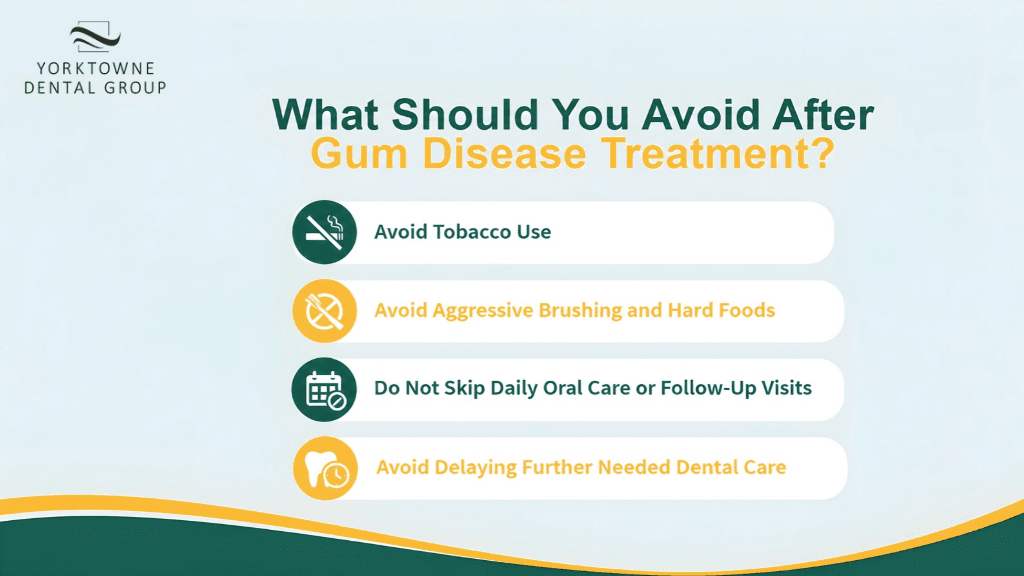
After receiving Gum Disease Treatment, protecting the treated areas and following post-care instructions helps ensure smooth recovery and long-term success.
1. Avoid Tobacco Use
- Restricted Blood Flow: Smoking restricts essential blood flow to healing tissues and interferes with natural recovery.
- Infection Risk: Tobacco use increases the risk of persistent infection and makes periodontal conditions harder to control.
2. Avoid Aggressive Brushing and Hard Foods
- Gentle Pressure: Use a soft-bristled toothbrush to avoid irritating sensitive, recovering gum tissue.
- Dietary Adjustments: Avoid hard, crunchy, or sticky foods immediately after deep cleaning to prevent localized discomfort.
3. Do Not Skip Daily Oral Care or Follow-Up Visits
- Consistent Hygiene: Gentle brushing and interdental cleaning prevent rapid plaque re-accumulation on treated surfaces.
- Professional Monitoring: Attending scheduled follow-up appointments allows your dentist to evaluate tissue recovery and control inflammation.
4. Avoid Delaying Further Needed Dental Care
- Aesthetic Concerns: Patients in Jenkintown whose gumline remains uneven after health stabilizes may later discuss options like Cosmetic Gum Reshaping.
- Alignment Solutions: Once tissues fully heal, options such as Clear Aligners can address alignment concerns safely.
Reviewing supportive home-care tips helps maintain healthy habits. Repairing minor decay with Tooth-Colored Fillings also keeps teeth clean and easy to care for.
Gum Disease Treatment: Signs, Options, and Benefits
| Signs You Need Care | Treatment Options | Core Benefits |
|---|---|---|
| Bleeding, swollen, or receding gums | Professional cleaning | Removes plaque and tartar |
| Bad breath or loose teeth | Scaling and root planing | Helps control gum infection |
| Deep periodontal pockets | Periodontal maintenance | Supports healthier gums |
| Gum soreness or tenderness | Advanced periodontal care | Helps protect teeth and bone |
| Changes in bite or tooth position | Regular dental follow-ups | Supports long-term oral health |
Why Choose Yorktowne Dental Group for Gum Disease Treatment?
Gum Disease Treatment is offered alongside preventive, restorative, implant, and periodontal services at a dedicated practice. This keeps your mouth healthy while directly addressing gum issues through comprehensive care.
During consultations, patients discuss bleeding gums, tissue swelling, deep pocket cleaning, and personalized maintenance plans. For patients with dental anxiety, comfortable treatment options help them remain relaxed and responsive during care.
Yorktowne Dental Group serves Jenkintown, Pennsylvania, providing convenient periodontal care close to home. Combining custom dental care with ongoing professional monitoring ensures complete oral wellness.
Conclusion
Gum Disease Treatment starts with an accurate evaluation and continues with consistent care and follow-up. Periodontal disease can affect more than oral comfort, directly interfering with your overall health and smile stability.
Without proper management, bacterial buildup causes bleeding, tissue recession, and tooth loss, but targeted care quickly restores healthier gums, comfort, and overall long-term oral health.
Contact us today and Book Free Consultation with Yorktowne Dental Group to discuss your symptoms in Elkins Park, Jenkintown, learn more about Gum Disease Treatment, and explore personalized care options for a healthy smile.
Frequently Asked Questions
1. Is Gum Disease Treatment painful?
Some patients experience mild sensitivity or tenderness after deeper cleaning. Local anesthesia may be used when needed, and your dentist will provide aftercare instructions.
2. How long does Gum Disease Treatment take?
Treatment time depends on disease severity, the number of affected areas, and the procedures recommended. Some patients need one visit, while others need several appointments and maintenance care.
3. Can gum disease return after treatment?
Yes. Plaque and tartar can build up again, so daily oral hygiene, professional cleanings, and follow-up visits remain important.
4. Can I prevent gum disease?
You can lower your risk by brushing twice daily, cleaning between your teeth, avoiding tobacco, and keeping regular dental appointments.
5. When should I see a dentist for Gum Disease Treatment?
Schedule an examination when bleeding, swelling, recession, bad breath, tenderness, or loose teeth continue or worsen. Early evaluation can help identify the cause and guide the next step.