How Periodontics Treats Receding Gums and Root Exposure
Periodontics treats receding gums and root exposure. Discover causes, symptoms, benefits, and expert gum care at Yorktowne Dental Group
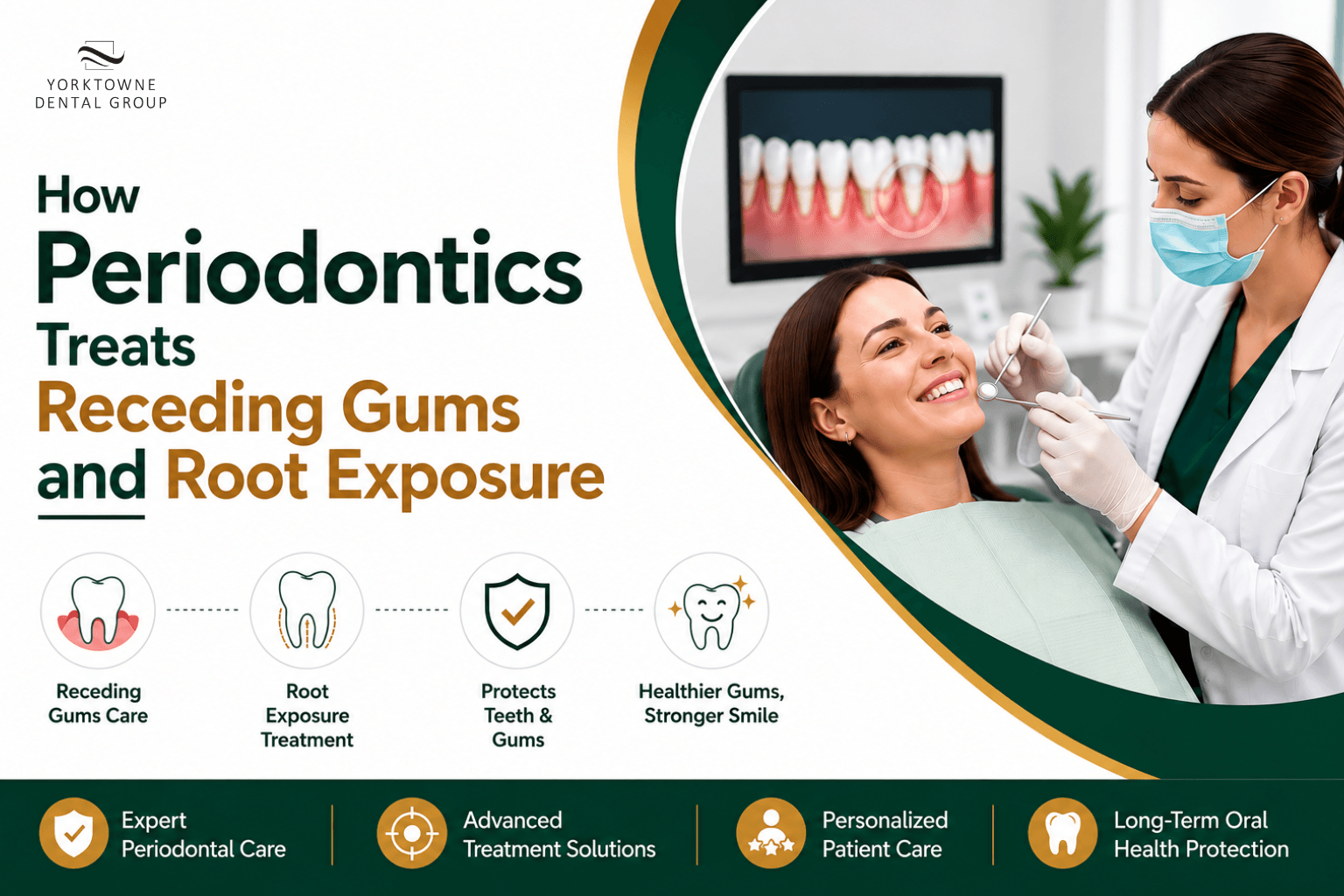
Periodontics plays a vital role in protecting your gums and preserving your smile. If your teeth look longer than before or you notice gum tenderness and sensitivity, it could be a sign of gum recession.
Left untreated, receding gums can expose tooth roots, increase the risk of decay, and even lead to tooth loss. The good news is that Periodontics offers effective treatments to restore gum health and protect your natural teeth.
At Yorktowne Dental Group in Elkins Park, Jenkintown, patients receive personalized periodontal care tailored to their needs. This guide explains gum recession, root exposure, and how the right treatment can help you achieve a healthier, more confident smile.
What Is Periodontics?
Periodontics is the branch of dentistry that focuses on the health of your gums, jawbone, and the tissues that support your teeth. It helps prevent, diagnose, and treat conditions such as gum disease, gum recession, and root exposure to protect your long-term oral health.
Patients may need Periodontics if they experience bleeding gums, bad breath, loose teeth, or receding gums. A periodontist evaluates your gum health and recommends treatments such as deep cleaning, gum grafting, or ongoing periodontal care based on your needs.
At Yorktowne Dental Group, patients receive personalized periodontal care using advanced technology and a gentle, patient-focused approach. As highlighted in Periodontal Surgery, timely periodontal care helps prevent tooth loss, restore healthy gums, and protect your natural smile for years to come.
What Are Receding Gums and Root Exposure?
Receding gums occur when the gum tissue pulls away from your teeth, exposing more of the tooth and eventually the root. Periodontics helps diagnose and treat this condition before it leads to serious oral health problems. As the gums recede, the exposed roots become more vulnerable to sensitivity, decay, and infection, increasing the risk of tooth loss if left untreated.
Root exposure occurs because the tooth root is covered by soft cementum instead of strong enamel. This makes the roots more prone to wear, cavities, and sensitivity to hot, cold, sweet, or acidic foods. Early Periodontics treatment helps protect exposed roots, restore gum health, and preserve your natural teeth.
Common Causes of Receding Gums and Root Exposure
Several factors can contribute to gum recession, including:
- Gum disease: Bacterial infection damages the gums and supporting bone.
- Aggressive brushing: Brushing too hard or using a hard-bristled toothbrush can wear away gum tissue.
- Poor oral hygiene: Plaque and tartar buildup increase the risk of gum disease.
- Teeth grinding and clenching: Excess pressure on the teeth and gums can lead to recession.
- Misaligned teeth or bite issues: Uneven pressure can weaken gum support.
- Tobacco use: Smoking and chewing tobacco reduce gum health and slow healing.
- Hormonal changes: Pregnancy, menopause, and other hormonal changes can make gums more sensitive.
- Genetics: Some people naturally have thinner gum tissue, making them more susceptible to recession.
Signs of Root Exposure
You may have root exposure if you notice any of the following symptoms:
- Teeth appear longer than they used to.
- Increased sensitivity to hot, cold, sweet, or acidic foods.
- Visible tooth roots near the gumline.
- Red, swollen, or bleeding gums.
- Spaces or pockets forming between the teeth and gums.
- Persistent bad breath.
- Loose teeth in advanced stages.
Why Early Treatment Matters
Ignoring receding gums can lead to serious oral health problems, such as:
- Higher risk of root cavities.
- Increased tooth sensitivity and discomfort.
- Progressive bone loss around the teeth.
- Gum infections and inflammation.
- Loose teeth or tooth loss.
- Changes in your smile’s appearance and overall confidence.
Early Periodontics treatment can stop gum recession from worsening and protect your natural teeth. Depending on your condition, your periodontist may recommend treatments like scaling and root planing, gum grafting, or regenerative procedures. Prompt care helps preserve your smile and support long-term oral health.
Healthy gums are essential before starting any Cosmetic Dentistry treatment for the best long-term results.
To learn about the different treatment options available, explore Periodontal Services.
What Are the Signs You Need Periodontal Treatment?
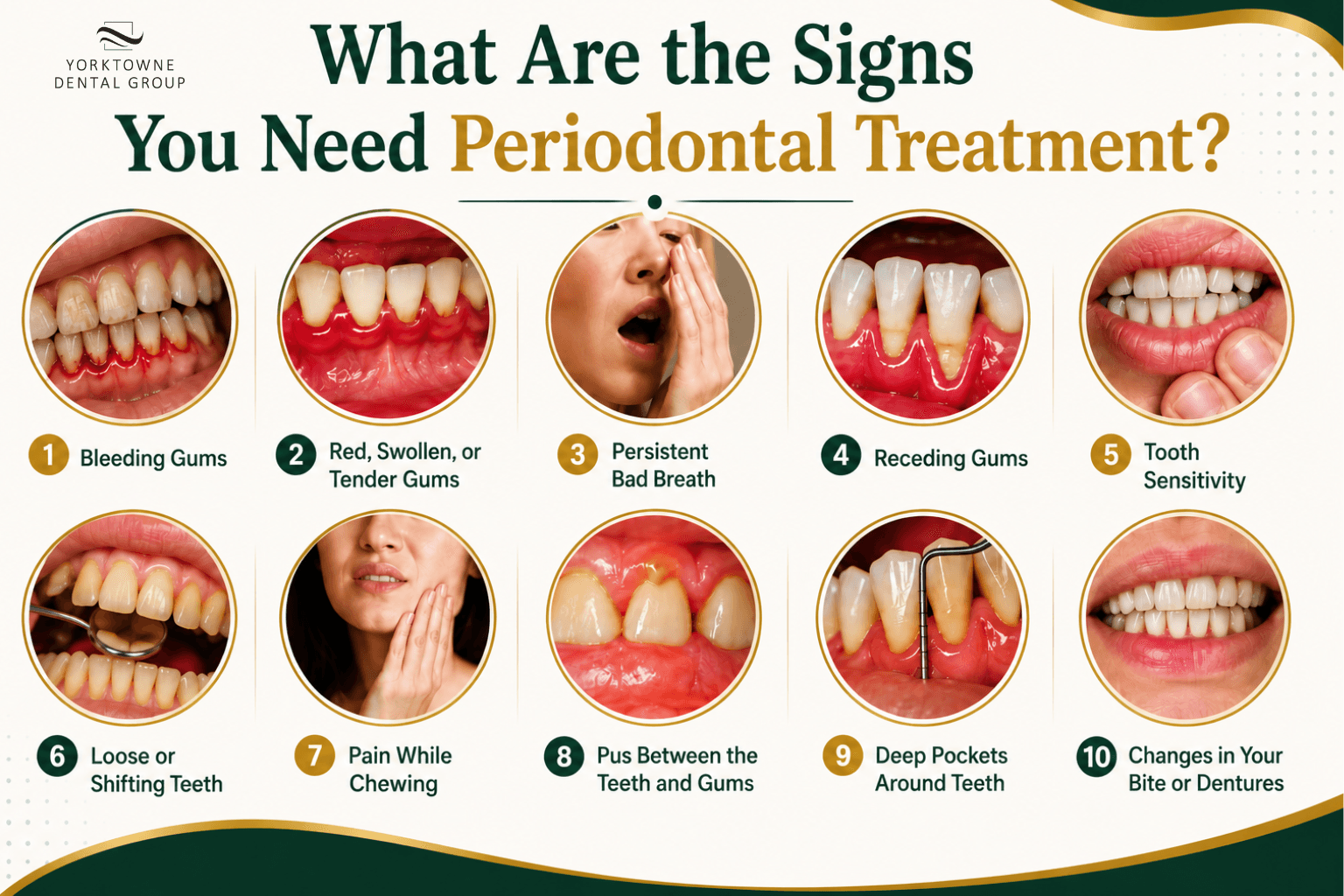
Gum disease often develops slowly, and many people don’t notice the early warning signs until the condition becomes more serious. Recognizing the symptoms early allows you to seek Periodontics treatment before permanent damage occurs. If you experience any of the following signs, it’s time to schedule a dental evaluation.
1. Bleeding Gums
Healthy gums should not bleed during brushing or flossing. Frequent bleeding is often an early sign of gum inflammation or periodontal disease.
2. Red, Swollen, or Tender Gums
Gums that appear red, swollen, or feel sore may indicate an infection caused by plaque and bacteria beneath the gumline.
3. Persistent Bad Breath
Bad breath that doesn’t improve with brushing or mouthwash may result from bacteria trapped in infected gum pockets.
4. Receding Gums
If your teeth look longer than before or your gums are pulling away from your teeth, gum recession may be progressing and requires professional treatment.
5. Tooth Sensitivity
Increased sensitivity to hot, cold, sweet, or acidic foods often occurs when gum recession exposes the tooth roots.
6. Loose or Shifting Teeth
As periodontal disease damages the bone and tissues supporting your teeth, they may become loose or begin to shift out of position.
7. Pain While Chewing
Discomfort or pain when biting or chewing can indicate damage to the gums, supporting bone, or tooth roots.
8. Pus Between the Teeth and Gums
Pus around the gumline is a clear sign of infection and should be treated immediately to prevent the condition from worsening.
9. Deep Pockets Around Teeth
Spaces or pockets forming between the teeth and gums allow bacteria to collect, increasing the risk of advanced gum disease.
10. Changes in Your Bite or Dentures
If your bite suddenly feels different or your dentures no longer fit properly, periodontal disease may have affected the underlying bone supporting your teeth.
Healthy gums and strong jawbone support are important for successful Dental Implants and long-term oral health.
Signs You May Need Periodontal Treatment
| If You Notice | It Could Mean |
|---|---|
| Bleeding gums | Early gum disease or gum inflammation. |
| Red or swollen gums | Your gums may be infected. |
| Bad breath that won’t go away | Bacteria may be trapped below the gumline. |
| Gums pulling away from teeth | Gum recession may be exposing your tooth roots. |
| Sensitive teeth | Exposed tooth roots may be causing discomfort. |
| Loose or shifting teeth | Gum disease may be weakening the bone supporting your teeth. |
| Pain while chewing | Your gums or supporting tissues may be damaged. |
| Pus around the gums | This is a sign of a serious gum infection. |
| Deep spaces between teeth and gums | Harmful bacteria may be collecting below the gumline. |
| Changes in your bite or denture fit | Bone loss from gum disease may be affecting your teeth. |
What Are the Benefits of Periodontal Treatment?
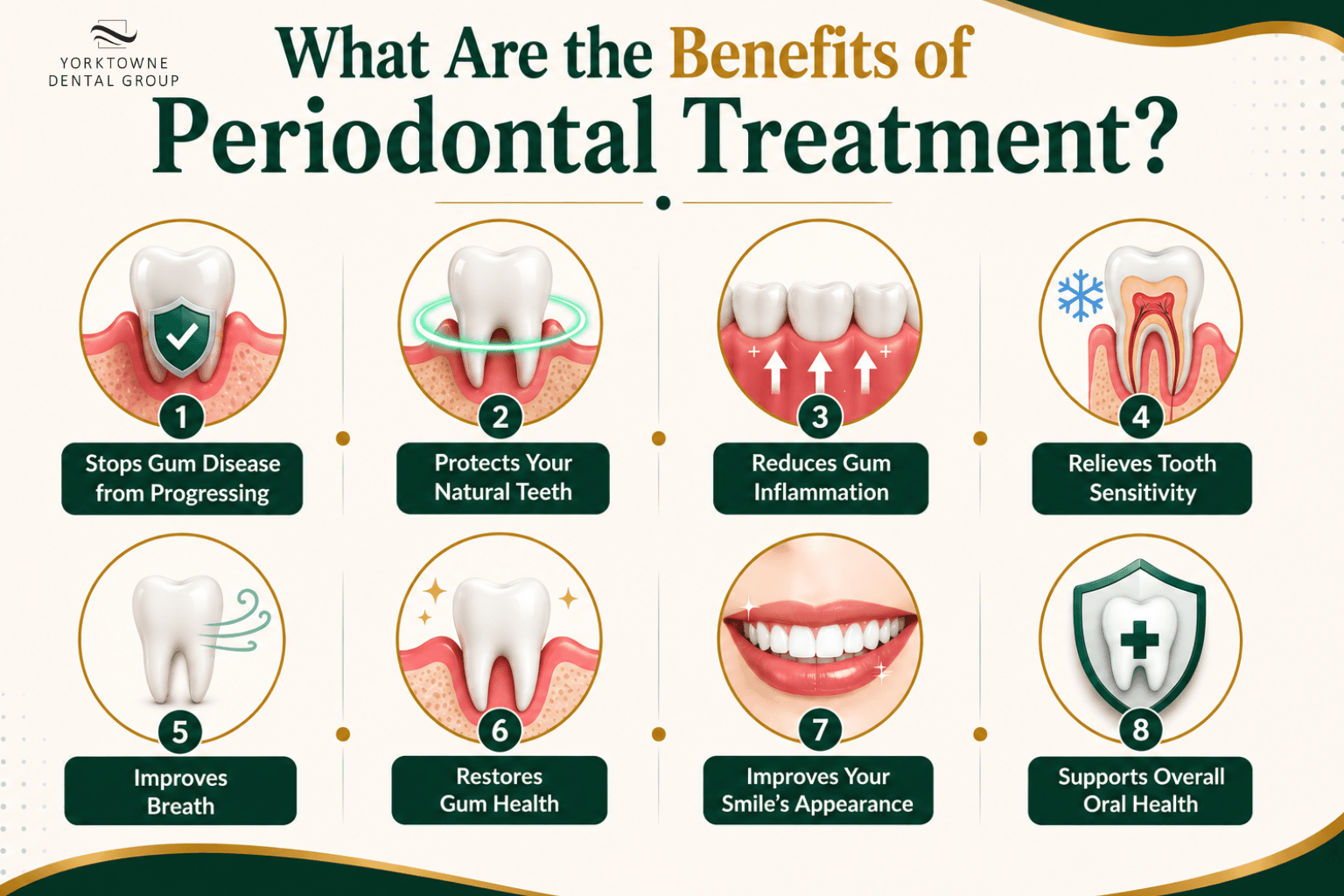
Periodontics does more than treat gum disease—it protects your teeth, improves your oral health, and helps preserve your smile for years to come. Early periodontal treatment can prevent minor gum problems from developing into more serious dental conditions.
1. Stops Gum Disease from Progressing
- Removes harmful bacteria: Professional periodontal treatment removes plaque, tartar, and bacteria from below the gumline, helping control infection before it spreads.
- Prevents further damage: Early treatment protects the gums and supporting bone from additional deterioration, reducing the risk of advanced periodontal disease.
2. Protects Your Natural Teeth
- Strengthens tooth support: Healthy gums and bone provide a stable foundation that keeps your teeth secure and functional.
- Reduces the risk of tooth loss: Treating gum disease early helps preserve your natural teeth by preventing damage to the tissues that support them.
3. Reduces Gum Inflammation
- Lowers swelling and redness: Periodontal treatment helps calm inflamed gum tissue, allowing your gums to heal and become healthier.
- Helps control bleeding: Healthy gums are less likely to bleed during brushing or flossing, making daily oral care more comfortable.
4. Relieves Tooth Sensitivity
- Protects exposed tooth roots: Treating gum recession helps reduce root exposure, which is a common cause of tooth sensitivity.
- Reduces discomfort: Patients often experience less pain when eating or drinking hot, cold, sweet, or acidic foods after treatment.
5. Improves Breath
- Removes bacteria below the gums: Eliminating bacteria and infected tissue helps address one of the leading causes of chronic bad breath.
- Keeps your mouth fresher: Cleaner gums create a healthier oral environment and promote fresher breath throughout the day.
6. Restores Gum Health
- Supports healthy gum tissue: Treatment encourages the gums to heal and reduces the risk of future infections.
- Improves daily oral hygiene: Healthier gums make brushing and flossing more effective, helping maintain long-term oral health.
7. Improves Your Smile’s Appearance
- Creates a healthier gumline: Healthy gums create the ideal foundation for cosmetic treatments like Dental Veneers, helping you achieve a healthier and more attractive smile.
- Boosts confidence: A healthier smile often makes patients feel more comfortable when speaking, laughing, and smiling.
8. Supports Overall Oral Health
- Creates a healthier gumline: Healthy gums create the ideal foundation for oral surgery treatments like Tooth Extraction, helping support better oral health and a healthier smile.
- Promotes long-term dental health: Regular periodontal care helps prevent future gum problems and supports a healthier smile for years to come.
For additional insights into healthy gums, read Importance of Periodontal Dentistry.
Why Choose Yorktowne Dental Group for Periodontics?
Choosing the right provider for Periodontics is essential for protecting your gums and natural teeth. Yorktowne Dental Group in Jenkintown, Pennsylvania provides personalized periodontal care using advanced technology and modern treatment techniques.
Every treatment plan is customized to your unique oral health needs, ensuring comfortable care and lasting results. The experienced team focuses on restoring healthy gums while helping prevent future dental problems.
In addition to Periodontics, Yorktowne Dental Group also offers Preventive Dentistry and Teeth Whitening. Patients in Elkins Park, Jenkintown trust the practice for compassionate care and comprehensive dental solutions in one convenient location.
Conclusion
Receding gums and root exposure can lead to serious oral health problems if left untreated, but early Periodontics care can help protect your gums, teeth, and smile. Recognizing the warning signs and seeking timely treatment reduces the risk of future complications.
Yorktowne Dental Group in Elkins Park, Jenkintown provides personalized periodontal care using advanced techniques to restore gum health and improve your smile. Schedule your consultation today and take the first step toward healthier gums and lasting oral health.
Take the first step toward healthier gums and a stronger smile. Yorktowne Dental Group Contact Us today to book your periodontics consultation.
Frequently Asked Questions
1. What is the main cause of receding gums?
Receding gums are most commonly caused by periodontal disease, aggressive brushing, tobacco use, and genetic predisposition. Periodontics can identify the specific cause and recommend targeted treatment.
2. Can receding gums grow back naturally?
No, gum tissue does not regenerate on its own once it recedes. However, periodontics offers treatments like gum grafting that can restore lost tissue and protect exposed roots.
3. Is periodontal treatment painful?
Most periodontics procedures are performed with local anesthesia, and modern techniques minimize discomfort. Patients typically experience mild soreness afterward, which resolves within a few days.
4. How do I know if I have root exposure?
Common signs include tooth sensitivity to hot, cold, or sweet foods, visible notches near the gumline, and teeth that appear longer than before. A periodontics evaluation can confirm the diagnosis.
5. How often should I visit a periodontist?
Patients with healthy gums may only need periodic checkups, while those with gum disease or recession often require more frequent periodontics visits, typically every three to four months.