
Sleep Apnea Treatment in Jenkintown, Pennsylvania: Local Solutions for Better Health
Explore Sleep Apnea Treatment in Jenkintown, PA, including symptoms, CPAP, oral appliances, benefits, and care options for adults.
Sleep Apnea Treatment offers an effective way to address sleep-related breathing issues while improving overall health and daily energy. Proper care helps relieve poor sleep, loud snoring, morning headaches, and fatigue, making it a vital solution for long-term wellness.
If you are considering this treatment for the first time, you may have questions about the evaluation, oral appliances, overall benefits, and custom care options. Understanding the process can help you feel more comfortable with your care.
For patients seeking Sleep Apnea Treatment in Jenkintown, Pennsylvania, learning about treatment options makes it easier to discuss your needs with your dentist. This guide explains the procedure, benefits, recommendations, and aftercare
What Is Sleep Apnea Treatment?
Sleep Apnea Treatment includes medical and dental options for reducing breathing interruptions during sleep. Because obstructive and central sleep apnea have different causes, patients should receive an evaluation before selecting treatment.
Treatment may include oral appliances, CPAP, positional changes, lifestyle adjustments, or other medical options based on the patient’s condition. A healthcare professional can recommend the right approach after reviewing symptoms and test results.
For obstructive sleep apnea, treatment may include an oral appliance, CPAP, lifestyle changes, or positional therapy. Family & General Dentistry can also support oral health when an appliance is being considered.
What Are the Signs You Need Sleep Apnea Treatment?
Recognizing warning signs of Sleep Apnea Treatment needs can help patients seek evaluation before disrupted sleep affects daily activities. Common signs include:
Step 1: Recognize Sleep Symptoms
- Loud or Frequent Snoring: Notice persistent or loud snoring during sleep.
- Gasping or Choking: Watch for gasping, choking, or pauses in breathing during sleep.
- Excessive Daytime Sleepiness: Feeling unusually tired or sleepy during the day may be a warning sign.
Step 2: Notice Morning and Daytime Changes
- Morning Headaches: Headaches after waking may occur with disrupted nighttime breathing.
- Dry Mouth After Waking: A dry mouth in the morning can be another possible sign.
- Difficulty Concentrating: Poor focus, irritability, or mood changes may affect daily activities.
Step 3: Know When to Seek Help
- Waking Repeatedly During the Night: Frequent waking may indicate a breathing problem.
- Seek Professional Evaluation: Several symptoms should be discussed with a healthcare professional.
- Do Not Ignore Warning Signs: Early evaluation can help identify the right treatment.
- Use Reliable Information: People in Pennsylvania can learn more about Obstructive Sleep Apnea Treatment.
What Are the Different Types of Sleep Apnea Treatment?
Sleep Apnea Treatment options depend on diagnosis, severity, and dental health. Common approaches keep the airway clear for restful sleep, while Nitrous Oxide Inhalation inhalation helps anxious patients relax during dental evaluations.
1. Oral Appliance Therapy
- Custom Fit: For selected adults with obstructive sleep apnea, a custom oral appliance keeps the airway open by repositioning the jaw or tongue.
- Professional Monitoring: Proper fitting and follow-up are critical because appliances can affect the bite, teeth, jaw, or comfort if not managed correctly.
2. Full-Arch Dental Restorations
- Comprehensive Care: All-on-X is a full-arch implant option for appropriate patients with multiple missing or failing teeth who require broader dental rehabilitation.
- Separate Purpose: Full-arch implants do not treat sleep apnea, but support overall oral health planning prior to appliance selection.
3. Single and Multi-Unit Restorations
- Tooth Replacement: Single-Multi Unit Implants describes implant-supported restorations designed to replace one or several missing teeth.
- Oral Health Evaluation: Routine implants do not treat sleep apnea, but resolving dental issues helps oral appliances fit comfortably.
What Are the Benefits of Sleep Apnea Treatment?
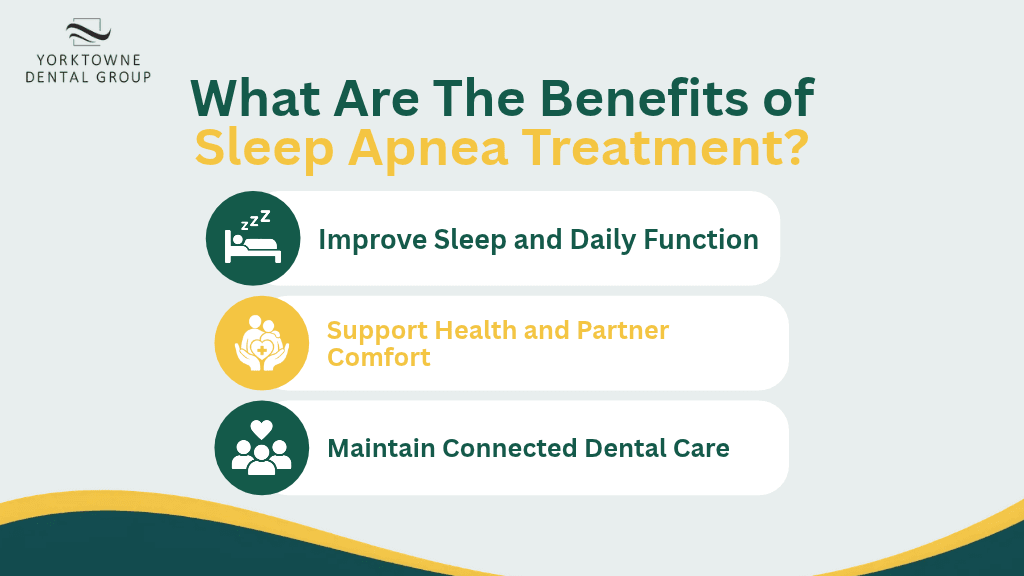
Effective Sleep Apnea Treatment in Elkins Park, Jenkintown can improve sleep quality, energy, and focus while reducing morning headaches, fatigue, and snoring.
Improve Sleep and Daily Function
- Fewer breathing interruptions during sleep
- Better-quality and more restorative sleep
- Less daytime fatigue, drowsiness, or morning headaches
- Improved concentration, alertness, and daytime function
Support Health and Partner Comfort
- Better sleep for a partner affected by loud snoring or breathing pauses
- Better management of sleep-apnea-related health concerns
- A professional evaluation helps determine if an oral appliance, CPAP, or combined care is best
- Patients can review Mayo Clinic guidance on Sleep Apnea Diagnosis and Treatment for proper care steps
Maintain Connected Dental Care
- Dentists routinely monitor teeth, gums, bite alignment, and oral appliance fit
- Apicoectomy may save a natural tooth if persistent infection occurs after root canal treatment
- Resolving underlying dental concerns supports overall mouth health during ongoing Sleep Apnea Treatment
- Patients in Pennsylvania keep sleep care and oral health connected through regular checkups
For selected patients with a persistent tooth infection after root canal treatment, an apical surgical procedure may help preserve the natural tooth. Maintaining good oral health also supports ongoing dental care.
What Is the Best Sleep Apnea Treatment for Adults?
Treatment depends on your diagnosis, severity, and oral health. There is no single best Sleep Apnea Treatment for every adult ensuring sound Endodontics care first protects natural teeth so oral appliances fit safely and consistently.
1. CPAP Therapy
- CPAP uses continuous positive airway pressure to help keep the airway open.
- It is an important option for many patients with obstructive sleep apnea.
2. Oral Appliance Therapy
- Oral appliance therapy may suit selected adults with obstructive sleep apnea.
- A custom device should be fitted and monitored to manage bite, tooth position, jaw comfort, and appliance fit.
3. Other Treatment Options
- Positional therapy and lifestyle changes may help in specific situations.
- Surgery may be recommended for some patients based on their individual condition.
- The goal is to choose an option that is safe, effective, and practical for consistent use.
4. Professional Guidance
- Treating and Managing Sleep Apnea offers ongoing care guidance.
- Ask whether a sleep study or oral appliance is appropriate.A
- Patients in Jenkintown, Pennsylvania should discuss symptoms with a healthcare professional.
The right option depends on diagnosis, gum health, and consistent use. Resolving Periodontics issues first ensures supporting structures can comfortably hold an oral appliance.
Sleep Apnea Treatment: Signs, Options, and Benefits
| Signs You Need Care | Treatment Options | Core Benefits |
|---|---|---|
| Loud snoring, gasping, or breathing pauses | Oral appliance therapy | Better sleep quality |
| Daytime sleepiness, fatigue, or headaches | CPAP or combined care | Reduced daytime fatigue |
| Dry mouth, poor focus, or mood changes | Professional evaluation | Improved focus and alertness |
| Frequent nighttime waking | Ongoing dental and medical monitoring | Less snoring and better partner comfort |
| Multiple sleep-related symptoms | Personalized treatment based on diagnosis | Supports overall health |
Why Choose Yorktowne Dental Group for Sleep Apnea Treatment?
Sleep Apnea Treatment is offered alongside preventive, restorative, implant, and periodontal services at a dedicated practice. This keeps your mouth healthy while directly addressing sleep issues through comprehensive care.
During consultations, patients discuss snoring, daytime fatigue, jaw comfort, and custom oral appliances. For patients with dental anxiety, sedation options help them remain relaxed and responsive during care.
Yorktowne Dental Group serves Jenkintown, Pennsylvania, providing convenient sleep therapy close to home. While sedation does not treat sleep apnea itself, combining custom dental care with medical guidance ensures complete wellness.
Conclusion
Sleep Apnea Treatment starts with an accurate evaluation and continues with consistent use and follow-up. Sleep apnea can affect more than nighttime breathing, directly interfering with your overall sleep quality and energy.
Without proper management, breathing interruptions cause daytime fatigue, poor focus, and daily disruptions, but targeted care quickly restores restful sleep, energy, and overall long-term health.
Contact us today and Schedule Free Consultation with Yorktowne Dental Group to discuss your symptoms, learn more about Sleep Apnea Treatment, and explore personalized care options for restful sleep.
Frequently Asked Questions
1. Can a dentist diagnose sleep apnea?
A dentist can identify signs that may suggest sleep apnea and evaluate whether dental treatment could help, but a formal diagnosis may require a medical sleep evaluation.
2. Is an oral appliance effective for sleep apnea?
An oral appliance can help selected adults with obstructive sleep apnea. A qualified professional should determine whether it is appropriate and monitor the appliance over time.
3. Do I need a sleep study before Sleep Apnea Treatment?
A sleep study may be recommended to confirm the diagnosis and determine severity. Your healthcare provider can advise whether a home or laboratory sleep study is appropriate.
4. Can Sleep Apnea Treatment stop snoring?
Treatment may reduce snoring when airway obstruction from sleep apnea causes it. Because snoring has other possible causes, evaluation is important.
5. How long does Sleep Apnea Treatment take to work?
The timeline varies by treatment and patient. Some people notice improvement soon after starting effective care, while others need adjustments and follow-up.