The Truth About Sedation Dentistry: What You Need to Know
Sedation Dentistry, including types, benefits, anxiety relief, recovery, and what to expect from your dental treatment.
Sedation Dentistry can make dental visits easier for patients who feel nervous or uncomfortable about treatment. You may worry about needles, dental instruments, unfamiliar sounds, discomfort, or spending too long in the dental chair.
Sedation does not always mean falling asleep. Depending on the medication and procedure, you may stay awake, communicate with your dentist, and remain aware while feeling calmer. Your dentist will consider your anxiety, treatment needs, medical history, and overall health before recommending an option.
For patients in Elkins Park, Jenkintown, knowing what to expect can make treatment feel less intimidating. Learning about sedation options, benefits, recovery, and important questions can help you make an informed decision about Sedation Dentistry.
What Is Sedation Dentistry?
Sedation Dentistry uses medication to reduce anxiety and help patients feel calmer during dental treatment. Your dentist chooses the right level based on your procedure, health history, medications, and individual needs.
Unlike local anesthesia, which numbs a specific area to control pain, sedation mainly helps you relax. Sedation may benefit patients who avoid dental care because of fear, have a strong gag reflex, or struggle with longer procedures.
If you receive regular care through Family & General Dentistry, your dentist may discuss sedation when a specific treatment causes anxiety. It supports a more comfortable experience but does not replace a proper examination or treatment plan.
What Are the Different Types of Sedation Dentistry?
The type of Sedation Dentistry you receive depends on your anxiety level, treatment, health history, and the level of relaxation you need. Common options include nitrous oxide, oral sedation, IV sedation, and general anesthesia.
1. Nitrous Oxide Sedation
- Quick Relaxation: Nitrous oxide, commonly called laughing gas, is inhaled through a small mask and helps you feel calm during treatment.
- Fast Recovery: You remain conscious and can communicate with your dentist, while the effects usually wear off quickly after the gas is stopped.
2. Oral Sedation
- Medication-Based Comfort: Your dentist prescribes medication to take before treatment, helping reduce anxiety and create a relaxed, drowsy feeling.
- Requires Transportation: Because the medication can cause lingering drowsiness, patients usually need a responsible adult to drive them home and follow post-treatment instructions.
3. IV Sedation
- Adjustable Sedation: Medication is delivered through a vein, allowing the dental team to adjust the sedation level according to your treatment and comfort needs.
- Deeper Relaxation: This option may suit patients with significant dental anxiety or those undergoing longer procedures, with monitoring throughout treatment.
4. General Anesthesia
- Complete Unconsciousness: General anesthesia places you into a controlled unconscious state, so you are not aware of the dental procedure.
- Specialized Care: General anesthesia is reserved for specific cases and requires medical monitoring. Patients in Jenkintown, Pennsylvania should discuss this option with their dentist.
For a broader explanation of the available Types of Sedation Dentistry, patients can review trusted dental information before discussing the most suitable Sedation Dentistry option with their dentist.
What Are the Benefits of Sedation Dentistry?
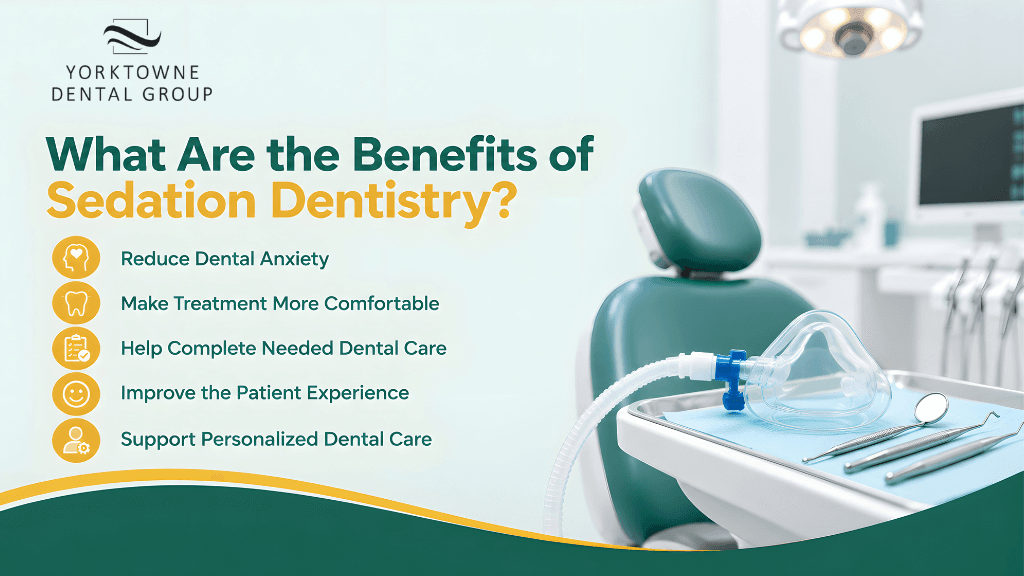
Reduce Dental Anxiety
- Less fear during dental procedures
- Greater sense of relaxation
- More comfortable dental visits
- Increased confidence about receiving care
Make Treatment More Comfortable
- Helps patients remain relaxed during longer procedures
- May reduce discomfort associated with dental instruments
- Can help patients with a strong gag reflex
- Supports a calmer treatment experience
Help Complete Needed Dental Care
- Makes Tooth Extraction easier to manage for anxious patients
- Supports patients who have difficulty sitting still
- May make longer appointments more manageable
- Helps patients receive necessary dental care
Improve the Patient Experience
- Less stress before and during treatment
- Better ability to cooperate with the dental team
- More positive feelings about future appointments
- Personalized sedation based on individual needs
Support Personalized Dental Care
- Your dentist reviews your health history and medications
- Sedation options vary according to treatment needs
- Patients in Jenkintown can discuss their concerns before treatment
- Preventive Dentistry can be coordinated with appropriate care when needed
Sedation Dentistry offers key Benefits of Sedation Dentistry, including reduced anxiety, greater relaxation, and improved comfort.
What Is Recovery Like After Sedation Dentistry?
Step 1: Understand Your Recovery
- Recovery Time: Nitrous oxide usually wears off quickly, while oral or IV sedation may cause drowsiness for longer.
- Driving: You may need a responsible adult to drive you home after certain sedation methods.
- Rest: Follow your dentist’s advice about resting and returning to normal activities.
Step 2: Follow Aftercare Instructions
- Transportation: Arrange a safe ride home when required after treatment.
- Activity: Avoid driving, operating machinery, or strenuous activities until your dentist approves.
- Medications: Follow all medication, food, and drink instructions provided by your dental team.
Step 3: Monitor Temporary Effects
- Common Effects: Drowsiness, dry mouth, headache, nausea, or vomiting may occur temporarily.
- Recovery: Rest and give your body enough time to recover before resuming your usual routine.
- Dental Support: Contact your dentist if symptoms become severe or do not improve.
Step 4: Consider Your Dental Treatment
- Treatment Recovery: Procedures such as Root Canal Treatment may require additional aftercare.
- Personalized Guidance: Your dentist will explain recovery based on your sedation method and procedure.
- Planning: Patients in Jenkintown, Pennsylvania should plan transportation and recovery time when necessary.
Patients considering All-on-X can discuss whether Sedation Dentistry may be useful for other procedures based on their individual needs.
Does Sedation Dentistry Reduce Dental Anxiety?
1. Reduce Fear and Anxiety
- Helps patients feel calmer before and during dental treatment.
- Can make needles, sounds, instruments, and dental procedures feel less stressful.
2. Improve Treatment Comfort
- Helps patients remain relaxed during longer or more complex procedures.
- May make treatment easier for patients who have a strong gag reflex or difficulty sitting still.
3. Support More Comfortable Dental Visits
- Can help patients who have delayed or avoided dental care because of fear.
- Creates a calmer experience while allowing the dental team to provide necessary treatment.
4. Make Future Care Easier
- A positive experience may help patients feel more confident about returning for dental care.
- Patients considering Clear Aligners can discuss whether sedation may be useful for other procedures based on their individual needs.
Key Benefits of Sedation Dentistry for Patients
| Aspect | Key Benefit | Patient Value |
|---|---|---|
| Anxiety Relief | Reduces fear and stress | Feel calmer during treatment |
| Better Comfort | Supports relaxation | Easier dental experience |
| Longer Procedures | Helps patients stay relaxed | More manageable appointments |
| Easier Dental Visits | Helps overcome dental fears | More confidence to seek care |
| Future Care | Creates a positive experience | May make future visits easier |
Why Choose Yorktowne Dental Group for Sedation Dentistry?
Yorktowne Dental Group focuses on making dental treatment more comfortable for patients who feel nervous or uneasy about visiting the dentist. Before recommending sedation, the dental team considers your health history, medications, treatment needs, and personal concerns to help determine the most appropriate option.
Located on Old York Road in Jenkintown, the practice welcomes patients from Elkins Park, Jenkintown and nearby communities. Its patient-focused approach can help make dental visits feel less stressful, especially for people who have postponed treatment because of dental anxiety.
A consultation gives you the opportunity to discuss your concerns openly and learn what to expect from Sedation Dentistry. Your dentist can explain the available sedation options, preparation requirements, and recovery process so you can approach your treatment with greater confidence.
Conclusion
Sedation Dentistry can be a useful option for patients who experience dental anxiety, have difficulty remaining comfortable during treatment, or need a longer procedure. It does not necessarily mean being unconscious. Depending on the method, you may remain awake and able to communicate while feeling significantly more relaxed.
The safest choice depends on your individual health history, medications, anxiety level, and planned treatment. If fear has caused you to postpone dental care, talk with a qualified dental professional rather than trying to choose a sedation method on your own.
Choose Yorktowne Dental Group for personalized Sedation Dentistry care. Schedule your consultation for comfortable treatment options. Contact us today to take the next step toward a more comfortable dental experience.
Frequently Asked Questions
1. Does sedation dentistry put me completely to sleep?
Not necessarily. Many forms of Sedation Dentistry allow you to remain conscious and respond to your dentist. The depth of sedation depends on the method selected and your individual treatment plan.
2. Can sedation dentistry help if I am afraid of needles?
Yes, sedation may help reduce anxiety associated with needles and other dental procedures. Tell your dentist about your specific fears so the team can determine whether sedation is appropriate for you.
3. Can I drive myself home after sedation?
It depends on the sedation method. Nitrous oxide may allow a relatively quick return to normal activities, while oral or IV sedation can require transportation and a period of rest. Always follow the specific instructions provided by your dentist.
4. Is sedation dentistry safe for everyone?
No sedation method is automatically appropriate for every patient. Your dentist should review your medical history, medications, allergies, treatment needs, and other relevant factors before recommending sedation.
5. How can I find out if sedation is right for me?
Schedule a consultation with Yorktowne Dental Group and discuss your anxiety, previous dental experiences, current medications, and planned treatment.