
A Complete Overview of Tooth-Colored Fillings for First-Time Patients
Restore your smile with natural Tooth-Colored Fillings at Yorktowne Dental Group. Serving Jenkintown & Elkins Park, PA. Schedule your consultation today!
Tooth-Colored Fillings offer a practical way to repair cavities while keeping your smile looking natural. Unlike metal fillings, they blend with the surrounding tooth, making them a popular choice for patients seeking both function and appearance.
If you are considering this treatment for the first time, you may have questions about the procedure, benefits, durability, and whether it can repair damaged or cracked teeth. Understanding the process can help you feel more comfortable with your dental care.
For patients in Elkins Park, Jenkintown, learning about treatment options can make it easier to discuss your needs with your dentist. This guide explains Tooth-Colored Fillings in Jenkintown, Pennsylvania, including the procedure, benefits, recommendations, and aftercare.
What Are Tooth-Colored Fillings?
Tooth-Colored Fillings are dental restorations made primarily from composite resin. Dentists use this material to repair teeth affected by cavities, minor fractures, wear, or other forms of tooth damage. The dentist can select a shade that closely matches your natural tooth color.
The main difference between composite and older amalgam fillings is appearance. Composite material bonds to the tooth and provides a more discreet, natural-looking restoration, especially for visible teeth.
According to information about when dentists may recommend this type of restoration, composite fillings can address several common forms of tooth damage. Recommend Tooth Colored Fillings
What Is the Tooth-Colored Fillings Procedure?
The Tooth-Colored Fillings procedure usually takes place during a regular dental appointment. Your dentist first examines the tooth and determines whether a filling can adequately address the problem.
Step 1: Examination
- Your dentist examines the tooth for decay, cracks, sensitivity, or structural damage.
- X-rays may be used to check how far the decay has progressed and whether Family & General Dentistry care is needed.
Step 2: Numbing the Tooth
- The dentist may use local anesthesia to numb the treatment area.
- This helps keep you comfortable, especially when decay reaches deeper areas of the tooth.
Step 3: Removing Decay
- The dentist carefully removes the decayed or damaged portion of the tooth.
- This creates a clean surface that allows the composite material to bond securely.
Step 4: Placing the Composite Material
- The dentist applies composite resin in layers, shaping and hardening each layer with a curing light.
- The material can be adjusted to match the natural shade and shape of your tooth. Composite Tooth-Colored Fillings
Step 5: Shaping and Polishing
- The dentist checks the restoration against your natural bite and removes any excess material.
- The filling is then smoothed and polished for a comfortable, natural-looking finish.
For patients in Pennsylvania, knowing what to expect can make the first visit easier. Most routine fillings require little recovery, though temporary sensitivity may occur.
Can Tooth-Colored Fillings Fix Cracked Teeth?
While Tooth-Colored Fillings can repair small surface chips and minor cracks, treatment depends on the crack’s depth, size, and location to ensure it suits the overall tooth structure.
1. When a Filling May Help
- Minor Damage Repair: A dentist may consider composite restoration when damage is small and sufficient healthy tooth structure remains.
- Protection Against Grinding: A Nightguard may be recommended if damage stems from nighttime grinding, helping reduce further wear.
2. When a Filling May Not Be Enough
- Deep Crack Risks: Deeper cracks can weaken the tooth or reach the inner tooth, making a filling insufficient and requiring Endodontics care.
- Alternative Care: Severe damage may require more extensive restorations to protect the remaining tooth structure.
- Additional Context: You can review Tooth-Colored Composite Fillings for more details on restorations and their dental applications.
Patients in Elkins Park, Jenkintown should get a cracked tooth evaluated early to determine the right treatment before damage worsens, rather than assuming a filling will fix it.
What Are the Benefits of Tooth-Colored Fillings?
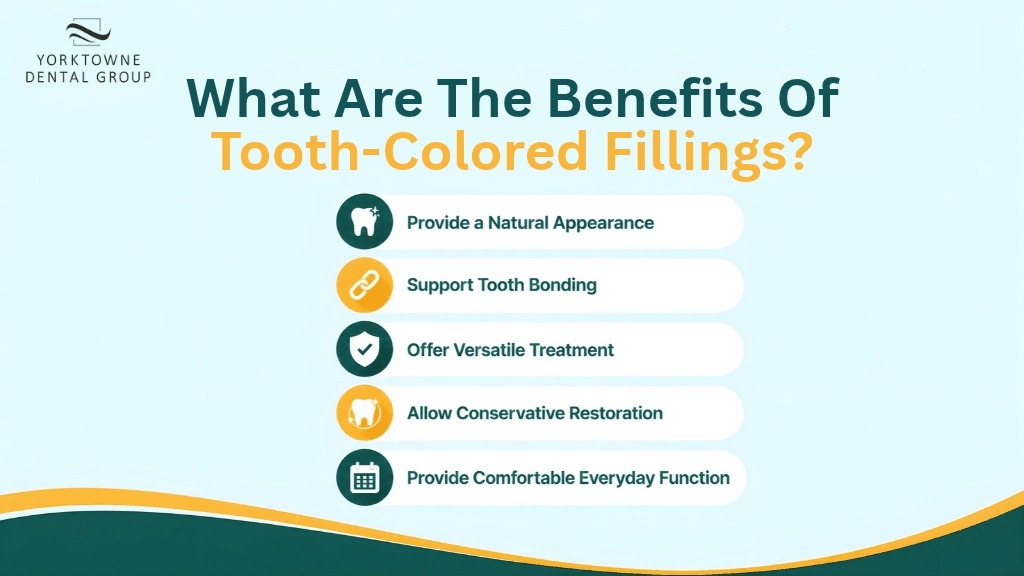
Tooth-Colored Fillings provide several advantages for patients who need to restore teeth affected by cavities or minor damage.
Provide a Natural Appearance
- The composite material can closely match your natural tooth shade.
- Once polished, the restoration can blend with the surrounding tooth.
- This cosmetic advantage makes Tooth-Colored Fillings especially useful for front teeth and other visible areas of the mouth.
Support Tooth Bonding
- Composite resin bonds directly to prepared tooth surfaces.
- This bonding process can help support the restored area.
- Allows the dentist to preserve healthy tooth structure.
Offer Versatile Treatment
- Dentists can use composite fillings for different types of minor tooth damage.
- Depending on the condition of the tooth, they may address cavities, small chips, or certain areas of wear.
Allow Conservative Restoration
- Your dentist generally removes the damaged portion of the tooth before placing the filling.
- This approach allows the restoration to address the problem.
- Preserves as much healthy tooth structure as possible.
Provide Comfortable Everyday Function
- After the restoration settles, you should be able to use the tooth normally.
- Your dentist will check your bite before completing treatment.
- Reduces the chance of discomfort caused by an uneven restoration.
Patients in Jenkintown, Pennsylvania may discuss preventive care, such as a Fluoride Treatment, with their dentist to help reduce the risk of future cavities based on their decay risk.
When Should You Replace Tooth-Colored Fillings?
Tooth-Colored Fillings do not last forever. Their lifespan depends on biting pressure and wear; however, extensive structural loss across multiple teeth may call for full-arch alternatives like Overdentures.
1. Replacement Needs
- You may need to replace a filling when your dentist identifies signs of deterioration or a new problem develops.
2. Signs Your Filling May Need Attention
- Common signs include new tooth sensitivity, biting pain, chips, or rough filling edges.
- Other indicators are food getting trapped, decay near the filling, or changes in its shape and appearance.
3. What Can Shorten Filling Longevity?
- Frequent sugary food consumption and poor oral hygiene increase the risk of plaque accumulation and recurrent decay.
- Teeth grinding and clenching place extra pressure on composite restorations, often requiring a protective appliance.
4. Alternative Restoration Strategies
- Patients who have lost several teeth may require a different treatment strategy.
- Depending on their needs, Full & Partial Dentures can replace missing teeth rather than repair an individual damaged tooth.
Routine dental exams help patients in Jenkintown, Pennsylvania identify filling issues early and evaluate long-term options like Dental Implants alongside existing restorations and surrounding teeth.
Tooth-Colored Fillings: Key Facts and Treatment Options
| Topic | Key Details | Solution |
|---|---|---|
| Procedure | Examines decay, removes damage, applies resin, and polishes | General Dentistry |
| Benefits | Natural-looking, strong bond, preserves tooth structure | Tooth-Colored Fillings |
| Cracks & Grinding | Fixes minor chips; severe cracks may need protection | Nightguards or Restorations |
| Replacement Signs | Sensitivity, pain, chips, or trapped food | Filling Replacement |
| Alternatives | Severe tooth damage may require full or partial coverage | Dentures |
Why Choose Yorktowne Dental Group for Tooth-Colored Fillings?
Choosing Yorktowne Dental Group helps patients understand their treatment options and determine whether a composite filling is right for them. A patient-focused appointment starts with a thorough examination, offering clear explanations and comfort measures to ensure nervous patients feel at ease.
For patients in Pennsylvania, a complete evaluation addresses immediate problems alongside broader oral health needs. Treatment is tailored specifically to your condition, whether you require a simple filling or separate options for tooth loss.
Maintaining your Tooth-Colored Fillings requires daily oral hygiene, limiting sugary foods, and avoiding using teeth as tools. Patients in Jenkintown should attend routine dental visits and report any sensitivity, pain, or changes around existing restorations promptly.
Conclusion
Tooth-Colored Fillings restore teeth with cavities or minor damage while preserving a natural smile. The process involves removing damaged tooth structure, applying composite material, shaping it, and adjusting your bite for comfortable function.
Because treatment depends on each tooth’s condition, small cavities require fillings, while severe cracks need other restorations. If you suspect a cavity, chip, or sensitivity, schedule an exam with Yorktowne Dental Group to protect your oral health.
Restore your smile with Tooth-Colored Fillings at Yorktowne Dental Group. Book Appointment and Contact us today to protect your oral health. Our team is ready to deliver the personalized care your smile deserves.
Frequently Asked Questions
1. Are Tooth-Colored Fillings safe?
Yes. Composite resin materials are widely used to restore teeth affected by decay and minor damage. Your dentist can determine whether this option is appropriate for your particular tooth.
2. How long do Tooth-Colored Fillings last?
Their lifespan varies based on the tooth’s location, restoration size, biting forces, oral hygiene, and personal habits. Regular dental examinations help your dentist determine when care or replacement is needed.
3. Is the procedure painful?
Treatment is generally performed with local anesthesia when needed. Some patients may experience temporary sensitivity afterward, but your dentist can provide guidance if discomfort continues.
4. Can Tooth-Colored Fillings repair a cracked tooth?
They can sometimes repair a minor chip or limited crack. However, deeper or more extensive cracks may require alternative restorative treatments. Your dentist should evaluate the damage before choosing a solution.
5. How should I care for my restored teeth?
Continue brushing twice daily, cleaning between your teeth, limiting frequent sugar exposure, and attending regular dental examinations. Avoid biting hard objects that could damage the composite material.