Tooth Supported Overdenture in Jenkintown, PA: Treatment Guide
Tooth Supported Overdenture can replace several missing teeth, improve stability, and preserve natural tooth support in Jenkintown, PA.
Tooth Supported Overdenture replaces several missing teeth while using existing natural teeth that still have enough support. Resting over selected natural teeth or prepared roots, this removable option provides support beyond the gums to help with chewing, speaking, and smiling.
Evaluating your oral health helps ensure the prosthesis is planned around your specific condition. Proper evaluation helps patients understand the treatment process, preparation requirements, and ongoing care expectations.
For patients considering a Tooth Supported Overdenture in Elkins Park, Jenkintown, understanding your options is key. Yorktowne Dental Group evaluates your teeth, gums, bite, and goals to guide your care.
What is a Tooth Supported Overdenture?
Tooth Supported Overdenture is a removable prosthesis that rests over one or more natural teeth or roots prepared as abutments. Dentists may reshape, restore, or place copings and attachment systems based on the condition of each tooth.
This treatment serves selected patients who still have suitable natural teeth. Dentists evaluate tooth structure, mobility, periodontal support, roots, bite, and available space to determine if restorative or endodontic care is needed first.
For patients seeking a Dental Tooth-Supported Overdentures in Jenkintown, Pennsylvania, a comprehensive evaluation determines if natural support is sufficient or if alternative treatments should be considered.
How does a Tooth Supported Overdenture stay secure in the mouth?
Tooth Supported Overdenture stays secure by gaining direct support from prepared abutment teeth plus surrounding oral tissues. Your dentist evaluates the number, position, plus health of remaining teeth to control movement during chewing plus speaking.
Abutment Tooth Preparation
- Reshape abutment teeth: Dentists in Jenkintown reshape selected teeth for comfortable fitting.
- Perform endodontic care: Root canal therapy restores abutment teeth prior to placement.
- Support tissues: Utilizing natural roots distributes pressure to boost overall retention.
Treatment Alternatives Maintenance
- Single multi unit implants: Replaces missing teeth when natural tooth support is limited.
- Full mouth dental implants: Used when remaining teeth fail to supply dependable support.
- Monitor prosthesis fit: Routine checkups evaluate worn attachments plus minor fit changes.
Consistent care helps identify fit changes early to protect supporting structures. Seeking prompt professional evaluations allows patients to compare natural retention with Overdentures Supported by Dental Implants for optimal comfort plus functional stability.
What are the Benefits of a Tooth Supported Overdenture?
Tooth Supported Overdenture restores chewing function while preserving natural teeth that serve as valuable support points. This approach avoids removing every remaining tooth solely to create a conventional complete denture.
1. Preserving Natural Teeth
- Maintain tooth support: Retains viable natural roots to stabilize your prosthesis.
- Avoid full extractions: Prevents unnecessary tooth removal required for traditional complete dentures.
2. Enhanced Stability Support
- Greater denture stability: Offers superior support compared to tissue-borne alternatives in Elkins Park.
- Preserve bone tissue: Helps maintain alveolar bone structure plus natural jaw sensation.
3. Restorative Care Integration
- Tooth-Colored Fillings: Restores minor tooth damage when integrated into your care plan.
- Rebuild support teeth: Strengthens compromised abutment teeth prior to prosthesis attachment.
4. Alternative Replacement Comparisons
- Single Multi Unit Implants: Lets patients review fixed replacement options alongside removable choices.
- Flexible treatment pathways: Helps determine whether fixed or removable restorations best fit your needs.
5. Adaptable Treatment Strategy
- Reassess abutment health: Allows dentists to adjust prostheses if supporting teeth change over time.
- Modify existing options: Ensures ongoing care flexibility without replacing the entire foundation.
6. Comprehensive Patient Care
- Endodontics therapy: Treats supporting root structures before overdenture fitting begins.
- Jenkintown Pennsylvania location: Delivers personalized local care for long-term oral health goals.
Patients can discuss Endodontics to evaluate their needs. Comparing Single & Multi Unit Implants can help determine the best treatment solution.
Why choose Yorktowne Dental Group for a Tooth Supported Overdenture?
Tooth Supported Overdenture requires careful treatment planning beyond final denture fit. Your dentist evaluates remaining teeth, periodontal health, bite alignment, facial support, plus ongoing hygiene needs to ensure predictable results.
Personal consultations allow patients to compare removable plus implant-based options openly. You can discuss chewing concerns, appearance goals, comfort expectations, treatment stages, plus long-term maintenance requirements before proceeding.
Yorktowne Dental Group helps patients in Elkins Park plus Jenkintown coordinate necessary dental care prior to prosthesis design. A clear, structured plan reduces surprises while delivering a solution tailored to your oral health.
What is the Difference between a Traditional Denture and a Tooth Supported Overdenture?
Traditional dentures rest solely on gum tissues, whereas a Tooth Supported Overdenture in Pennsylvania anchors over selected natural teeth or roots. Evaluating tooth plus tissue health helps determine if this custom prosthesis fits your treatment goals.
- Traditional dentures rest directly on gum tissues.
- Tooth Supported Overdentures Procedure uses natural roots as support.
- Selection depends on root condition, mobility, plus abutment distribution.
- Periodontics care stabilizes supporting tissues prior to placement.
- Implant-supported options offer alternative retention strategies.
- All-on-X supplies fixed restorations when natural abutments prove insufficient.
Traditional Denture vs Tooth Supported Overdenture
| Feature | Comparison |
|---|---|
| Support | Rests mainly on the gums |
| Stability | May shift during eating or speaking |
| Tooth Preservation | Does not preserve natural tooth support |
| Chewing | May feel less secure |
| Comfort | Can create gum pressure |
| Maintenance | Requires routine denture care |
Which Types of attachments are used with a Tooth Supported Overdenture?
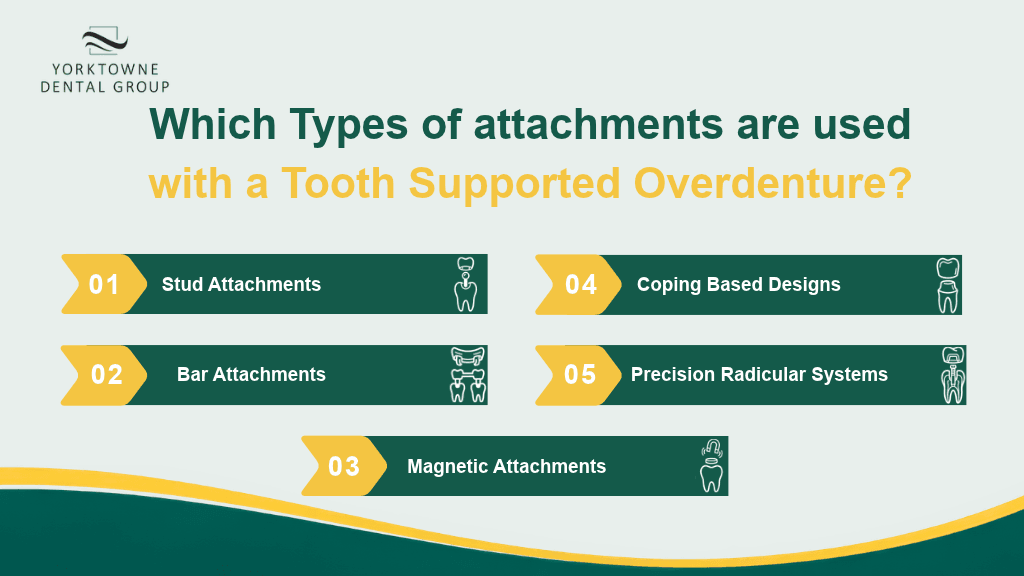
Tooth Supported Overdenture uses specialized attachments when extra retention is required beyond prepared abutment teeth. Your dentist selects an attachment system based on remaining tooth structure, available space, bite forces, plus daily cleaning capabilities.
1. Stud Attachments
- Supplies compact retention between abutment teeth plus removable prostheses.
- Controls appliance movement effectively during daily chewing.
2. Bar Attachments
- Links multiple supporting components together across dental arches.
- Establishes a structured seating path when adequate space exists.
3. Magnetic Attachments
- Uses compact magnetic units in selected clinical cases.
- Assists patients who require easier prosthesis placement.
4. Coping Based Designs
- Fits specialized protective copings directly over prepared teeth.
- Protects underlying natural roots against potential wear.
5. Precision Radicular Systems
- Delivers heightened stability for complex radicular overdenture designs.
- Requires diligent home hygiene plus routine professional checkups.
Candidates require a thorough evaluation of abutment health before treatment. This prosthesis offers reliable tooth replacement when natural roots provide strong support. Explore Dental Implants and Full Mouth Dental Implants as additional options.
Tooth Supported Overdenture: Key Features
| Feature | Details |
|---|---|
| Support | Uses remaining natural teeth |
| Stability | Offers secure positioning |
| Purpose | Replaces several missing teeth |
| Comfort | Reduces denture movement |
| Chewing | Improves chewing function |
| Appearance | Provides a natural-looking smile |
| Bone Support | Helps maintain jawbone support |
| Care | Requires regular dental maintenance |
Conclusion
Tooth Supported Overdenture in Jenkintown, Pennsylvania replaces missing teeth while preserving viable natural roots. Retaining healthy tooth structures improves overall stability plus functional comfort.
A personal dental examination is essential to evaluate your remaining teeth and determine treatment suitability. Your dentist reviews individual benefits, potential limitations, plus overall health considerations to build a customized care plan tailored to your needs.
Yorktowne Dental Group can assess your tooth replacement options, including Tooth Supported Overdenture, and align care with your long-term goals. Contact us today and Book Free Consultation with our team to get started.
Frequently Asked Questions
1. Can I sleep with a Tooth Supported Overdenture?
Follow your dentist’s instructions. Many removable dentures are removed at night for cleaning and to allow the oral tissues to rest.
2. Can it replace several missing teeth?
Yes. A Tooth Supported Overdenture can replace multiple missing teeth when suitable natural teeth remain to provide support.
3. How long can the prosthesis last?
Its lifespan depends on oral health, fit, material wear, home care, and professional maintenance.
4. Will it feel uncomfortable at first?
A new removable Tooth Supported Overdenture may feel unfamiliar during the adjustment period. Follow-up visits can address pressure points, bite issues, or fit concerns.
5. What happens if a supporting tooth becomes weak?
Your dentist will examine the tooth and decide whether it can be repaired or treated, or whether the prosthesis needs modification.