Dental Implants: All You Need to Know About
Considering dental implants in Jenkintown, Pennsylvania? Learn the types, procedure, benefits, and what affects cost. Book a consultation with Yorktowne Dental Group today.
Missing teeth affect more than just your smile, they can impact how you chew, speak, and feel about yourself every day. Fortunately, dental implants have become the gold standard for tooth replacement, offering a permanent, natural-looking solution that restores both function and confidence. Whether you’re missing a single tooth or several, dental implants are designed to look, feel, and perform like your own natural teeth.
If you’ve been searching for dental implants in Jenkintown or dental implants in Pennsylvania, this guide covers everything you need to know from what dental implants are, to the types available, the procedure, benefits, and what determines cost. At Yorktowne Dental Group, our team helps patients throughout the region rebuild healthy, confident smiles.
What Are Dental Implants?
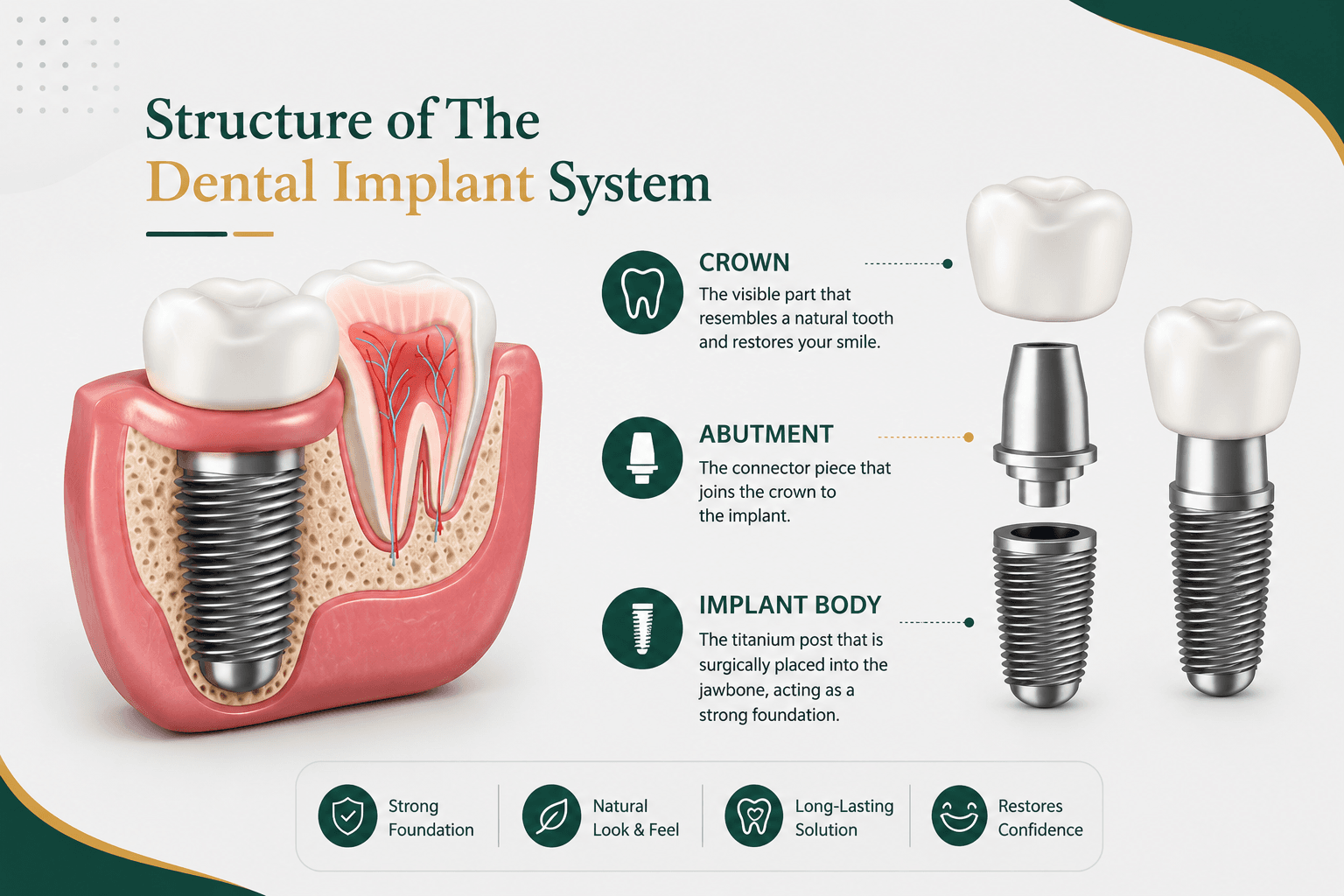
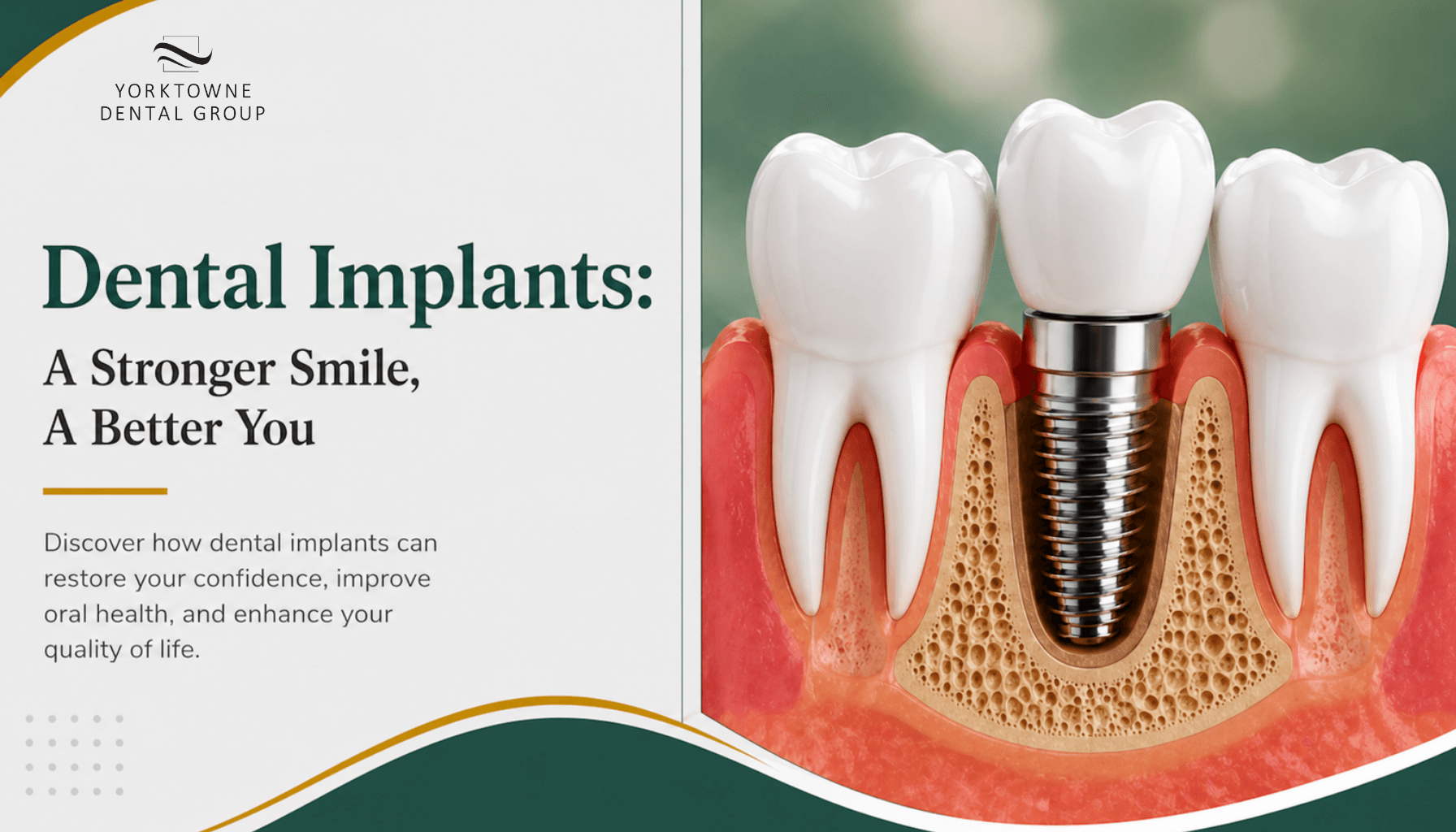
Dental implants are small titanium posts as an implant body and abutment that are surgically placed into the jawbone to act as artificial tooth roots. Once healed, these posts support a custom-made crown, bridge, or denture, giving patients a stable, long-lasting replacement for missing teeth.
Unlike removable dentures or traditional bridges, dental implants fuse directly with the jawbone through a process called osseointegration. This creates a strong, permanent foundation that doesn’t shift, slip, or require removal for cleaning. Many patients searching for dental implants near me are specifically looking for this kind of durable, low-maintenance solution.
To find out if you’re a candidate, visit our dental implants services page or reach out through our contact page to schedule an evaluation.
Types of Dental Implants
Not every patient needs the same treatment. The right type of implant depends on how many teeth are missing, jawbone density, and your long-term goals. Here are the most common options:
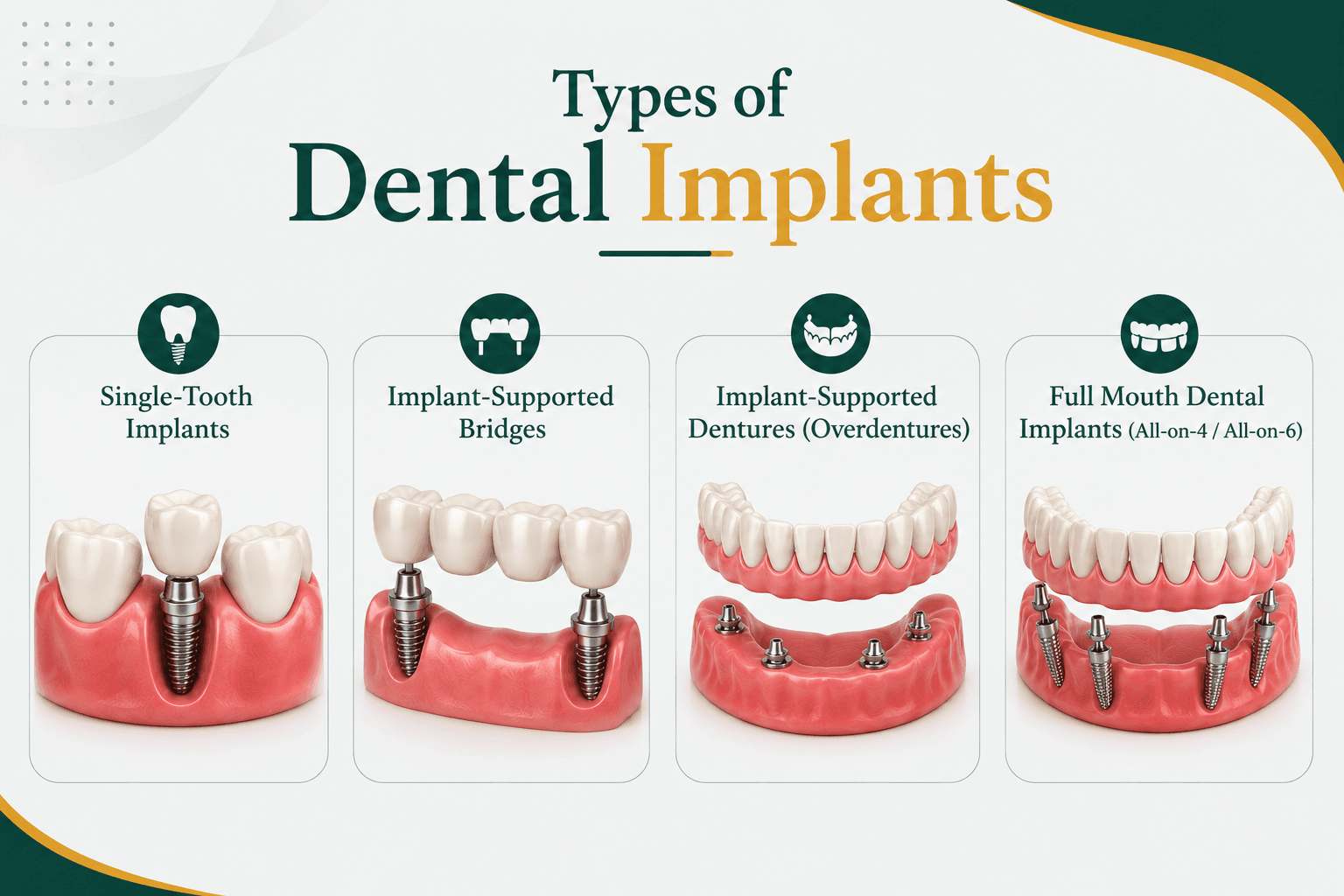
Single-Tooth Implants
- Replaces one missing tooth
- Doesn’t affect neighboring healthy teeth
- Topped with a custom crown
- Preserves bone at the missing tooth site
- Ideal for isolated tooth loss
Implant-Supported Bridges
- Replaces several missing teeth in a row
- Uses two implants to anchor a bridge
- Avoids grinding down adjacent teeth
- More stable than a traditional bridge
- Good for multiple missing teeth in one area
Implant-Supported Dentures (Overdentures)
- Removable denture that snaps onto implants
- More secure than traditional dentures
- Easier to clean and maintain
- Reduces slipping while eating or speaking
- Good option for patients wanting flexibility
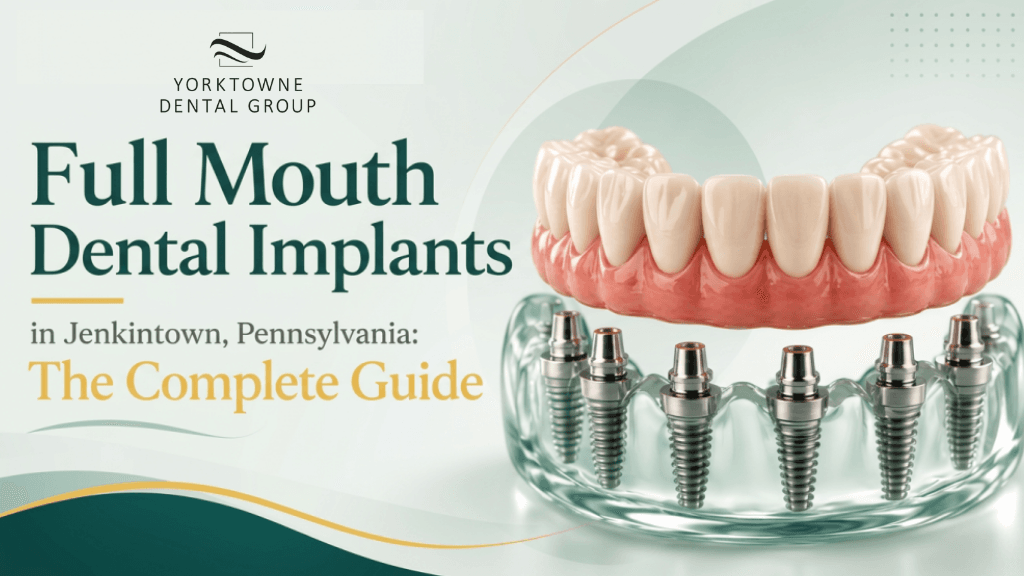
Full Mouth Dental Implants (All-on-4 / All-on-6)
- Replaces an entire arch of teeth
- Uses 4–6 implants per arch
- Fixed, non-removable solution
- Prevents further bone loss
- Best for patients missing most or all of their teeth
| Type | Key Feature | Best For |
|---|---|---|
| Single-Tooth Implant | One implant, one crown | Isolated missing tooth |
| Implant-Supported Bridge | Two implants anchor a bridge | Multiple missing teeth in a row |
| Implant-Supported Overdenture | Removable denture on implants | Flexible, removable option |
| Full Mouth Dental Implants | 4–6 implants per arch | Missing most/all teeth |
A consultation is the best way to determine which type of dental implant treatment is right for your smile and budget.
What Is the Procedure for Dental Implants?
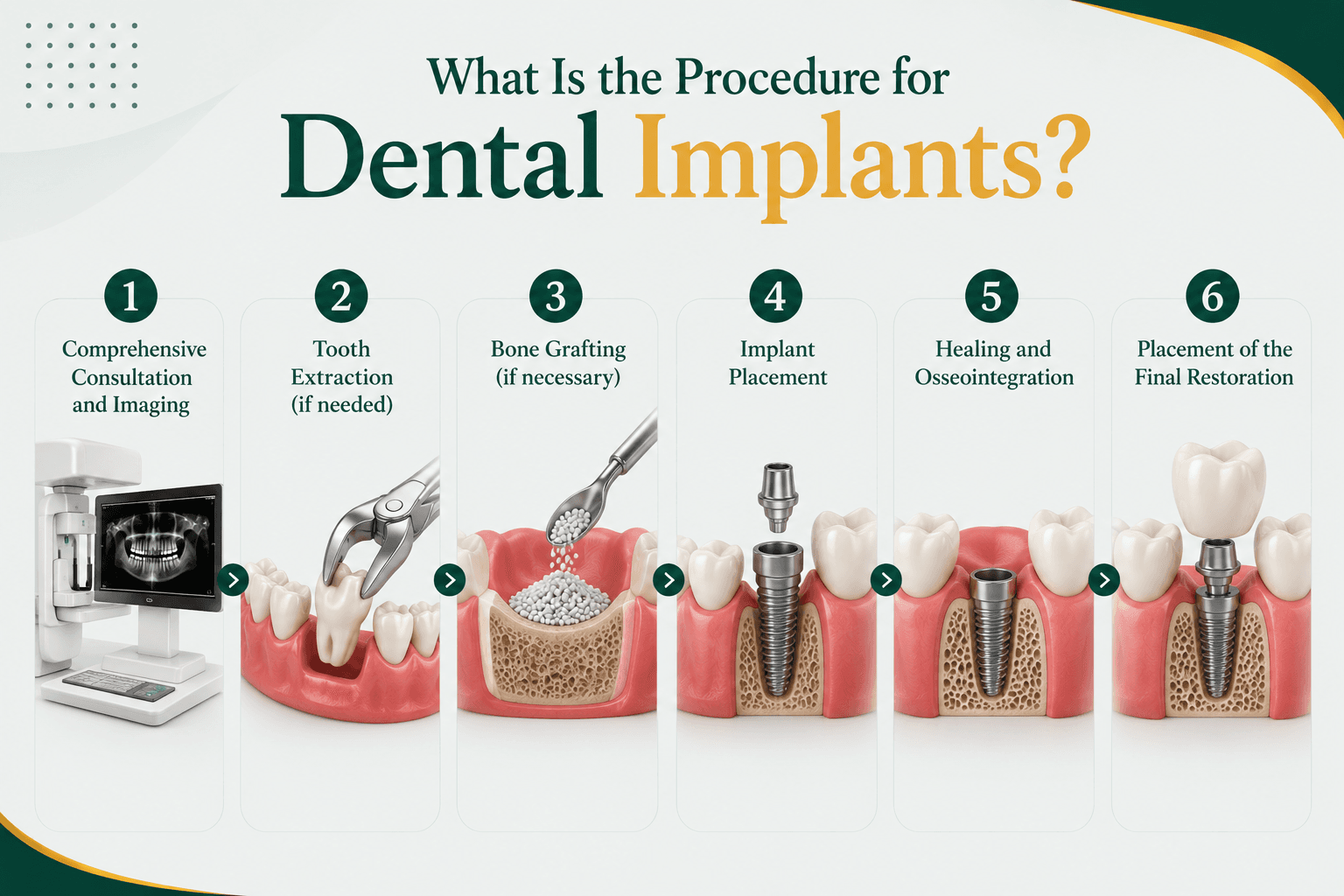
While every treatment plan is personalized, the dental implant process generally follows these stages:
- Comprehensive Consultation and Imaging – Digital X-rays and 3D scans evaluate bone density and map out implant placement.
- Tooth Extraction (if needed) – Damaged or decayed teeth are removed prior to treatment.
- Bone Grafting (if necessary) – Patients with insufficient jawbone density may need grafting to build a strong foundation.
- Implant Placement – A titanium post is surgically positioned into the jawbone.
- Healing and Osseointegration – Over the following months, the implant fuses with the bone.
- Placement of the Final Restoration – A custom crown, bridge, or denture is attached, completing your new smile.
Depending on your bone quality and treatment plan, some patients may qualify for temporary teeth during the healing phase. You can browse real results in our smile gallery or explore our full range of services.
What Are the Benefits of Dental Implants?
Patients choose dental implants for a wide range of reasons, including:
- Natural look and feel – Custom-shaded restorations blend seamlessly with your smile
- Improved chewing function – Bite confidently and enjoy a wider variety of foods
- Bone preservation – Implants stimulate the jawbone, helping prevent the bone loss that follows tooth loss
- No slipping or adhesives – Unlike removable dentures, implants stay firmly in place
- Long-term durability – With proper care, implants can last decades
- Protects healthy teeth – Unlike a traditional bridge, implants don’t require altering adjacent teeth
- Boosted confidence – A complete, stable smile supports clearer speech and self-esteem
For most patients, dental implants offer a meaningful improvement in quality of life compared to dentures or bridges.
How Many Implants Are Needed?
The number of implants required depends on how many teeth are missing and the treatment approach:
- Single missing tooth: 1 implant
- Multiple missing teeth (implant bridge): 2 implants supporting several crowns
- Full arch replacement: 4–6 implants per arch (All-on-4 or All-on-6)
Your dentist will confirm the exact number needed based on a 3D scan, bone density evaluation, and your restoration goals. Book an appointment with our team to get a personalized treatment plan.
Benefits of Dental Implant Systems
Beyond restoring your smile, dental implant systems offer several clinical and lifestyle advantages that make them a preferred choice over other tooth-replacement options:
- Jawbone preservation – Implants stimulate the bone the same way natural tooth roots do, slowing the bone loss that typically follows tooth loss
- Facial structure support – Maintaining bone density helps prevent the sunken facial appearance often associated with missing teeth or long-term denture wear
- Improved speech clarity – Unlike ill-fitting dentures, implants don’t shift or slip, which helps prevent slurred or mumbled speech
- Better nutrition – A stable bite makes it easier to eat a full range of foods, including firmer items like fruits, vegetables, and meats
- No impact on healthy teeth – Implants don’t require reshaping or grinding down adjacent natural teeth, unlike traditional bridges
- High long-term success rate – Dental implants have a well-documented success rate of over 95% when properly placed and maintained
- Convenience – No removal, soaking, or special adhesives required — implants are cared for just like natural teeth
Risks Associated with Dental Implant Systems
As with any surgical procedure, dental implants carry some risks. While complications are relatively uncommon, patients should be aware of the following:
- Infection at the implant site – Can occur during healing if oral hygiene isn’t properly maintained
- Implant failure or rejection – The implant may not fully fuse with the jawbone (failed osseointegration)
- Nerve or tissue damage – Improper placement can occasionally affect surrounding nerves, potentially causing numbness or tingling
- Sinus complications – Upper jaw implants placed too close to the sinus cavity can sometimes lead to sinus issues
- Insufficient bone density – Patients with significant bone loss may need grafting before implants are viable
- Prolonged healing time – Certain health conditions (like uncontrolled diabetes or smoking) can slow osseointegration
- Mechanical issues – Over time, components like screws or abutments may loosen and require adjustment
Choosing an experienced clinical team and following post-operative care instructions significantly reduces these risks.
Ways Dental Implants Are Evaluated for Safety
Before recommending dental implants, dentists conduct a thorough evaluation to ensure the treatment is both safe and effective for each patient. This typically includes:
- 3D imaging and CT scans – Used to assess bone density, volume, and the precise location of nerves and sinuses
- Comprehensive medical history review – Identifies conditions (such as diabetes, osteoporosis, or autoimmune disorders) that could affect healing
- Gum and periodontal health assessment – Active gum disease must typically be treated before implants can be placed
- Bone density testing – Determines whether bone grafting is needed to support the implant
- Bite and jaw alignment analysis – Ensures the final restoration will function properly with your natural bite
- Material safety standards – Reputable implants use biocompatible titanium or zirconia, materials that are well-tolerated by the body and backed by decades of clinical research
This careful evaluation process is why a proper consultation — rather than a generic online estimate — is essential before starting treatment.
Recovery and Outlook for Dental Implants
Recovery timelines vary from patient to patient, but here’s a general overview of what to expect:
- First 24–72 hours – Mild swelling, bruising, or discomfort is normal and typically managed with over-the-counter pain relief and ice packs
- First 1–2 weeks – Soft foods are recommended while the surgical site begins to heal
- 2–6 weeks – Initial gum healing is typically complete, though deeper bone healing continues
- 3–6 months – Osseointegration occurs, where the implant fully fuses with the jawbone
- Final restoration – Once healing is confirmed, the permanent crown, bridge, or denture is attached
Long-term outlook:
- With proper oral hygiene and regular dental visits, implants can last 20–30 years or longer
- Routine check-ups allow your dentist to monitor the implant, the surrounding gum tissue, and bite alignment
- Most patients report a significant improvement in comfort, confidence, and quality of life once healing is complete
When Should I Call My Dentist?
While some discomfort after implant surgery is expected, certain symptoms should prompt a call to your dental office right away:
- Persistent or worsening pain that isn’t relieved by medication
- Significant swelling that continues to increase after the first few days
- Signs of infection, such as fever, pus, or a bad taste/odor at the implant site
- The implant feels loose or shifts when touched
- Numbness or tingling that doesn’t improve after the expected healing window
- Difficulty opening your mouth or swallowing
- Bleeding that doesn’t subside with gentle pressure
If you experience any of these symptoms, don’t wait, contact Yorktowne Dental Group right away so our team can evaluate your implant and ensure your recovery stays on track.
Cost of Dental Implants
One of the most common questions we hear is about the cost of dental implants. Whether you’re asking about dental implants cost, dental implants cost for a full mouth, or general pricing, the honest answer is: it depends on your treatment plan.
Several factors influence the overall investment, including:
- The number of implants needed
- Whether bone grafting or extractions are required
- The type of restoration (single crown, bridge, overdenture, or full arch)
- The materials used for the final prosthetic
- Any additional diagnostic imaging or sedation needs
Because every case is unique, we recommend speaking directly with our team for an accurate quote based on your oral health. Visit our insurance and financing page to learn about payment options, or contact Yorktowne Dental Group to schedule a consultation and get a personalized cost breakdown.
Why Choose Yorktowne Dental Group for Dental Implants in Jenkintown, PA
Patients throughout Jenkintown and the surrounding Pennsylvania area trust Yorktowne Dental Group for our patient-centered approach, advanced imaging technology, and experienced clinical team. We walk you through every step from your first consultation to your final restoration so you always know what to expect.
Whether you’re exploring dental implants for the first time or you’ve already done your research and are ready for treatment, our Jenkintown, PA office is here to help. Resources like the Mayo Clinic, Cleveland Clinic, American Dental Association (ADA), American Academy of Implant Dentistry, and the American Academy of Periodontology also offer helpful general background on implant dentistry but nothing replaces a personalized, in-person evaluation. You can also review your patient information before your visit.
Ready to Restore Your Smile?
Dental implants can transform not just your smile, but your confidence and daily quality of life. If you’re located in Jenkintown, Pennsylvania, or anywhere nearby and are ready to explore your options, our team at Yorktowne Dental Group is here to guide you every step of the way.
Book your appointment today or contact us to schedule your consultation.
Frequently Asked Questions
1. How much do dental implants cost?
There’s no one-size-fits-all price — it depends entirely on your treatment plan. Contact us or book an online appointment to understand your options.
2. Are dental implants a good idea?
For most patients missing one or more teeth, yes — implants are generally more stable, durable, and natural-feeling than dentures or bridges.
3. Can you get dental implants if you have osteopenia?
Usually yes, often with bone grafting support if needed. Your dentist will evaluate your bone density during a consultation.
4. Is it better to get implants right after extraction or wait?
Both approaches work it depends on your bone quality and healing, which your dentist will evaluate individually before recommending a plan.
5. How painful is dental implant surgery?
Minimal pain—procedure is done under anesthesia, with mild soreness after.
6. Is getting a tooth implant a major surgery?
No, it’s a minor outpatient surgical procedure.
7. How long is the surgery for dental implants?
Typically 30–60 minutes per implant.
8. What is the biggest problem with dental implants?
The main risk is implant failure or infection if healing is not successful.