The Step-by-Step Decision Guide for Full Mouth Dental Implants
Explore Full Mouth Dental Implants in Jenkintown, PA, including candidacy, implant types, procedure, recovery, benefits, and expert care at Yorktowne Dental Group.
Introduction
Losing most or all of your natural teeth can affect much more than your smile. Full Mouth Dental Implants provide a permanent solution that helps restore comfort, function, and confidence. Patients in Elkins Park, Jenkintown often choose this treatment to enjoy a secure, natural-looking smile for years to come.
This step-by-step guide explains every stage of the treatment journey in simple, patient-friendly language. From understanding how the procedure works to learning who qualifies and what to expect during recovery, each section is designed to answer common questions and support informed decisions.
Whether you are exploring Dental Implants or preparing for a consultation, this guide will help you feel confident about your next step. With clear explanations and practical insights, you’ll better understand whether Full Mouth Dental Implants are the right choice for restoring your smile and supporting your long-term oral health.
What Are Full Mouth Dental Implants?
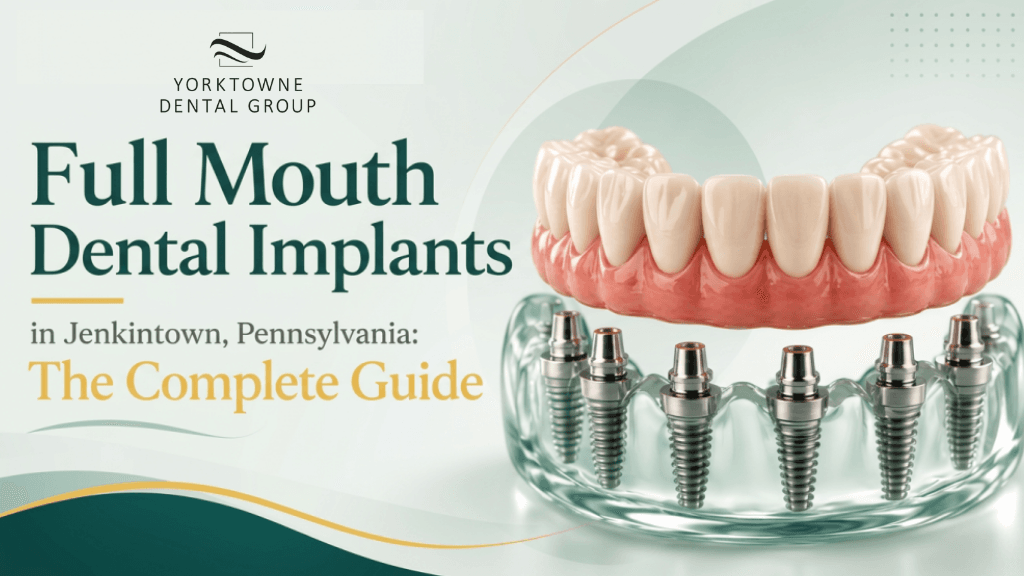
Full Mouth Dental Implants replace an entire arch of missing or damaged teeth using implant posts placed in the jawbone and a fixed dental bridge. Unlike removable dentures, they stay securely in place and provide a stable, natural-looking smile.
The treatment usually involves four to eight implants per arch, creating strong support for a complete set of replacement teeth. This design helps preserve the jawbone, improves chewing ability, and restores everyday comfort.
Many patients explore Dental Implants for Full Mouth rehabilitation before choosing treatment to better understand its long-term benefits. This research helps them make a confident and informed decision about restoring their smile.
Who Is a Good Candidate for Full Mouth Dental Implants?
Not everyone with missing teeth needs this treatment, but many patients in Jenkintown, Pennsylvania find that Full Mouth Dental Implants are the best long-term solution. A dental examination, digital X-rays, and a review of your medical history help determine whether you are a suitable candidate.
- Missing most or all teeth in the upper or lower arch, or both.
- Failing teeth caused by severe decay, gum disease, or dental trauma.
- Loose or uncomfortable dentures that affect eating, speaking, or daily comfort.
- Healthy jawbone with enough bone to support implants, or eligibility for bone grafting if needed.
- Good overall health without uncontrolled medical conditions or active gum infections.
- Non-smokers or patients willing to quit, as smoking can slow healing after implant surgery.
Age is not the deciding factor for treatment. Many older adults successfully restore their smiles with this procedure and enjoy long-lasting results. Patients looking to improve both function and appearance may also discuss Cosmetic Dentistry options during their implant consultation for a more complete smile transformation.
What Are the Different Types of Full Mouth Dental Implants?
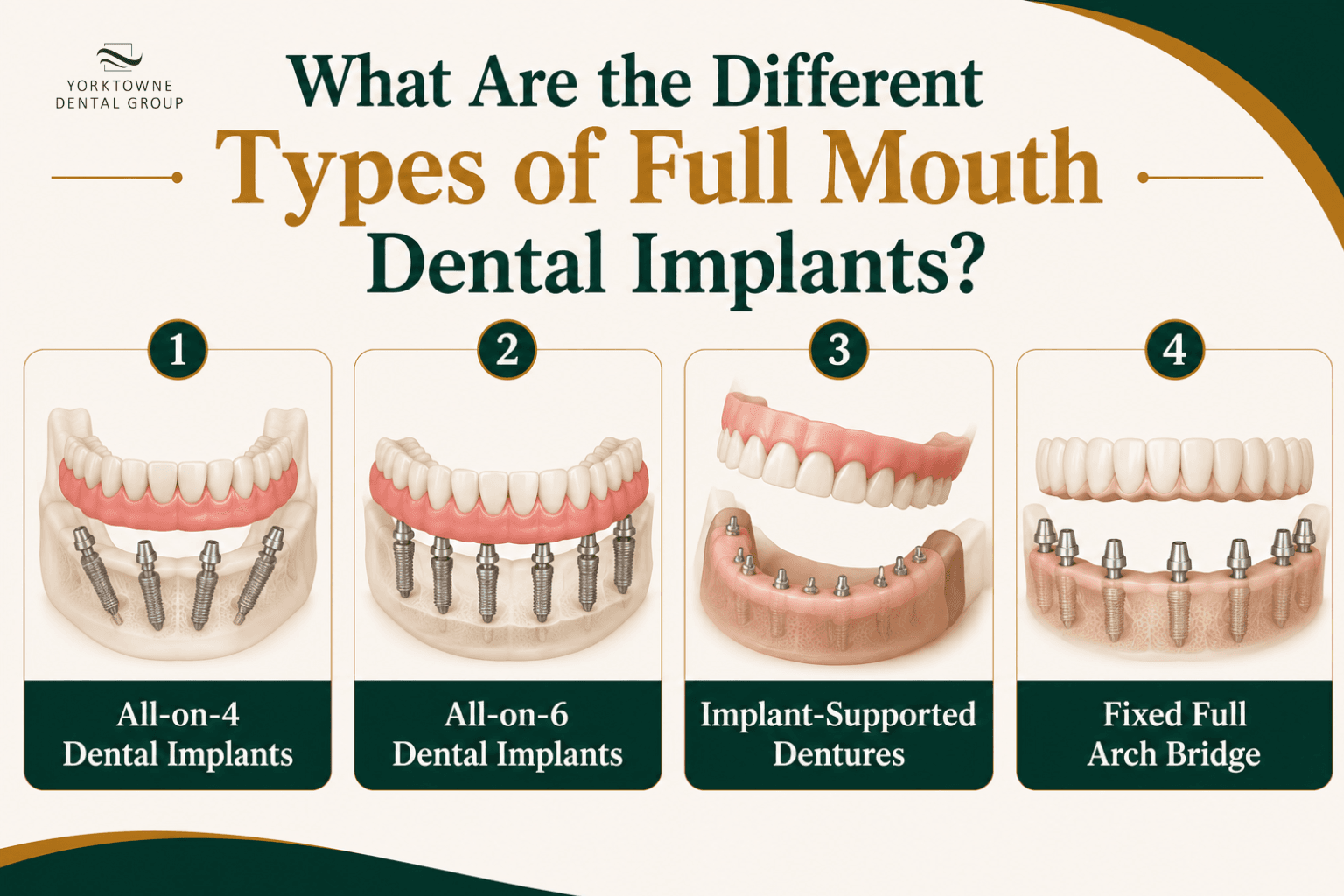
There are several types of Full Mouth Dental Implants, and each option is designed to suit different oral health needs, bone density, and treatment goals. Your dentist will recommend the best option after evaluating your oral health.
All-on-4 Dental Implants
- Ideal Candidates: Patients with moderate bone density who want a fixed full-arch restoration supported by four implants per arch.
- Key Advantages: Offers a secure, natural-looking smile, often reduces the need for bone grafting, and typically heals within 3–6 months.
All-on-6 Dental Implants
- Recommended For: Patients who require greater stability, stronger bite support, and have enough jawbone to accommodate six implants.
- Treatment Highlights: Provides improved chewing strength, distributes pressure evenly, and usually requires 3–6 months for healing.
Implant-Supported Dentures
- Suitable Option: Patients looking for a removable, implant-retained solution that is more stable than traditional dentures and fits a lower budget.
- Why Choose This Option: Uses 2–4 implants, improves comfort and chewing ability, and has an average recovery period of 2–4 months.
Fixed Full Arch Bridge
- Who Can Benefit: Patients who want a permanent, non-removable full-mouth restoration supported by 6–8 implants.
- Long-Term Benefits: Delivers maximum stability, functions like natural teeth, and generally requires 4–6 months for complete healing.
Each option offers unique benefits based on your oral health and treatment goals. Many patients review Full Mouth Dental Implants Upper and Lower to understand the best approach for their smile. Some also compare Dental Veneers, but veneers improve existing teeth rather than replace missing ones.
Full Mouth Dental Implant Options Comparison
| Implant Type | Number of Implants | Best For | Recovery Time |
|---|---|---|---|
| All-on-4 | 4 implants per arch | Patients with moderate bone density | 3–6 months |
| All-on-6 | 6 implants per arch | Patients needing extra stability | 3–6 months |
| Implant-Supported Dentures | 2–4 implants | Budget-conscious patients wanting removable option | 2–4 months |
| Fixed Full Arch Bridge | 6–8 implants | Patients wanting permanent, non-removable teeth | 4–6 months |
What Is the Full Mouth Dental Implant Procedure?
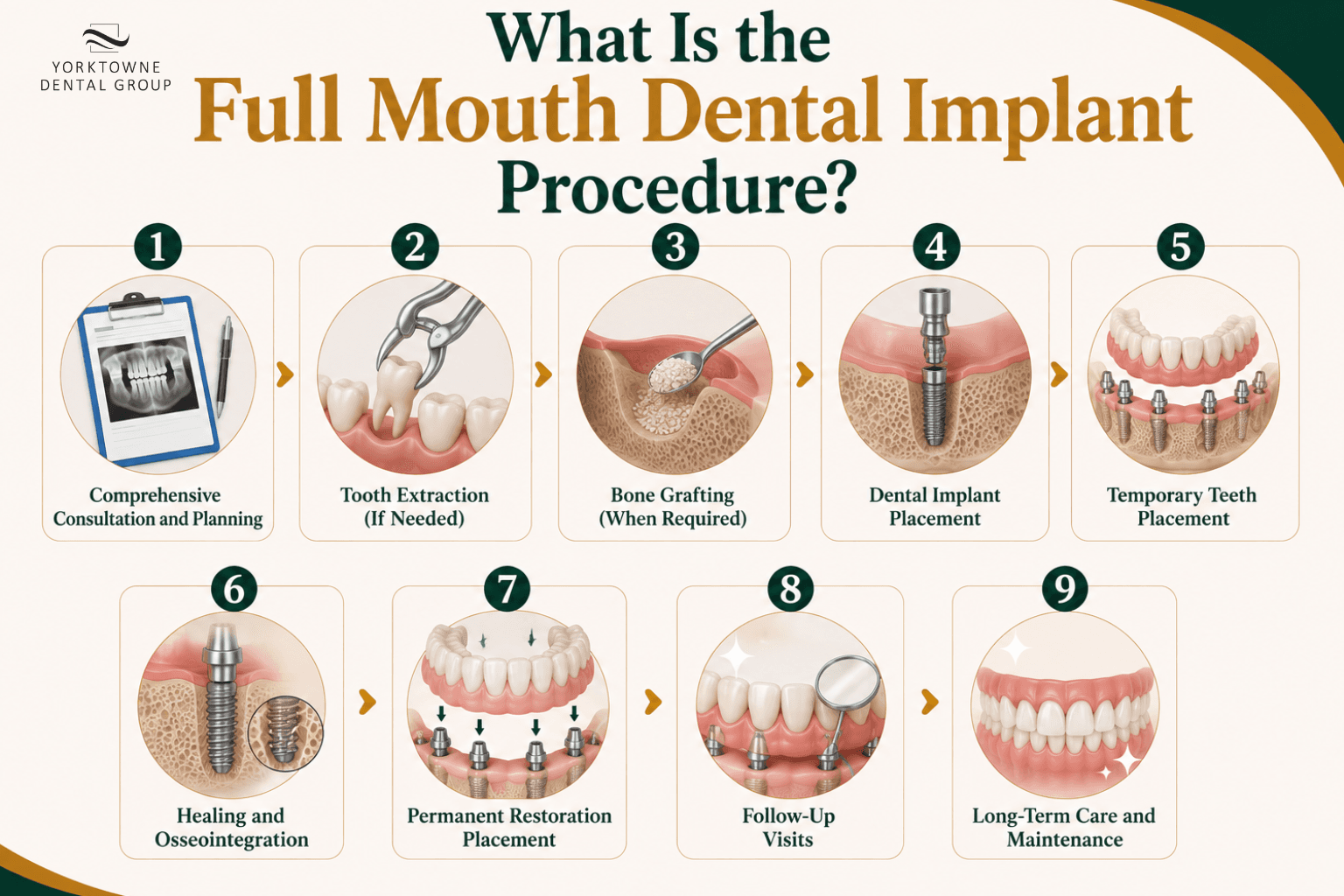
The Full Mouth Dental Implants procedure is completed in carefully planned stages to ensure safe treatment, proper healing, and long-lasting results. Each step is designed to restore your smile while making the process as comfortable as possible.
Step 1: Comprehensive Consultation and Planning
Your treatment begins with a detailed dental examination, digital X-rays, and 3D imaging to evaluate your jawbone and overall oral health. Based on the findings, your dentist creates a personalized treatment plan that outlines the number and placement of implants.
Step 2: Tooth Extraction (If Needed)
If damaged, decayed, or failing teeth are still present, they are carefully removed before implant placement. In many cases, tooth extraction and implant surgery can be completed during the same appointment to reduce treatment time.
Step 3: Bone Grafting (When Required)
Patients with insufficient jawbone density may need a bone graft before implants are placed. This procedure strengthens the jawbone and creates a stable foundation for successful implant placement and long-term support.
Step 4: Dental Implant Placement
Titanium implant posts are surgically inserted into the jawbone to replace natural tooth roots. The procedure is performed under local anesthesia or sedation, helping patients remain comfortable throughout the treatment.
Step 5: Temporary Teeth Placement
Many patients receive a temporary prosthesis on the same day as implant surgery. This allows them to leave with a functional, natural-looking smile while the implants heal beneath the gums.
Step 6: Healing and Osseointegration
Over the next 3 to 6 months, the jawbone naturally fuses with the implant posts through a process called osseointegration. Patients who want a detailed overview of this healing stage can explore the Full Mouth Dental Implants Procedure guide before treatment.
Step 7: Permanent Restoration Placement
After healing is complete, your custom-designed permanent bridge or prosthetic teeth are securely attached to the implants. If you have remaining natural teeth, Teeth Whitening can help create a brighter, more uniform smile. The final restoration is crafted to provide a comfortable bite, natural appearance, and long-lasting function.
Step 8: Follow-Up Visits
Your dentist schedules regular follow-up appointments to monitor healing, ensure the implants remain stable, and make any necessary adjustments for optimal comfort and performance.
Step 9: Long-Term Care and Maintenance
Daily brushing, flossing, and routine Preventive Dentistry visits help keep your implants healthy for years to come. Proper maintenance protects your investment and supports lasting oral health.
Why Choose Yorktowne Dental Group for Full Mouth Dental Implant?
Choosing the right dental team is just as important as choosing the right treatment. Yorktowne Dental Group combines experienced dentists, advanced technology, and personalized care to deliver successful Full Mouth Dental Implants. Patients in Elkins Park, Jenkintown trust the team for honest guidance and comfortable treatment.
Every treatment plan is tailored to the patient’s unique needs and smile goals. The team takes time to explain each step, answer questions, and ensure patients feel informed and confident throughout the process. When needed, Periodontics services are coordinated to create a healthy foundation before implant placement.
From your first consultation to your final restoration, Yorktowne Dental Group focuses on quality, comfort, and long-term results. Ongoing follow-up care and preventive guidance help patients protect their investment and enjoy a healthy, confident smile for years to come.
Conclusion
Deciding to move forward with Full Mouth Dental Implants is a major step toward restoring your smile, oral function, and confidence. The process becomes much easier when it is broken down into clear stages, from determining candidacy to selecting the right implant option and understanding the treatment journey. With the right guidance, you can make an informed decision that supports your long-term oral health.
At Yorktowne Dental Group, we proudly help patients throughout Jenkintown, Pennsylvania navigate every step of the Full Mouth Dental Implants process with personalized care and expertise. Our experienced team is committed to creating a treatment plan tailored to your needs and goals. Schedule a consultation today to discover whether Full Mouth Dental Implants are the right solution for your smile.
Ready to reclaim your smile? Yorktowne Dental Group Contact us today to Schedule Your Consultation for Full Mouth Dental Implant and take the first step toward lasting comfort and confidence.
Frequently Asked Questions
1. How long do Full Mouth Dental Implants last?
With proper care, implants can last 20-25 years or longer, while the prosthetic teeth attached to them may need replacement every 10-15 years due to normal wear.
2. Is the Full Mouth Dental Implants procedure painful?
Most patients report mild discomfort managed easily with prescribed medication, and many are surprised by how manageable recovery feels compared to their expectations.
3. How much do Full Mouth Dental Implants cost?
Costs vary based on the number of implants, type of prosthesis, and any additional procedures like bone grafting or extractions needed beforehand.
4. Can I eat normally after getting Full Mouth Dental Implants?
Yes, once healing is complete, patients can eat most foods without restriction, a major advantage over traditional dentures that limit certain textures.
5. How do I know if I need implants for the upper arch, lower arch, or both?
This depends on the condition of your existing teeth in each arch, which your dentist will assess during your initial consultation and imaging review.