
Single Tooth Implant in Jenkintown, PA: A Complete Treatment Guide
Single Tooth Implant replaces a missing tooth, including treatment stages, food choices, long-term care, and implant benefits.
Single Tooth Implant treatment replaces a missing tooth using an implant post, abutment, and custom crown for stable support. Restoring a missing tooth helps protect daily chewing, speech clarity, self-confidence, and natural alignment.
Addressing practical questions about healing times, dietary choices, and bridge comparisons helps patients evaluate restoration options. Clear guidance ensures a smooth treatment journey, recovery process, and long-term care plan.
Single Tooth Implant in Jenkintown, Pennsylvania offers a reliable solution for patients evaluating missing-tooth care. A comprehensive evaluation helps address practical concerns and guides appropriate care for your long-term smile.
How does a Single Tooth Implant work to replace a missing tooth?
Single Tooth Implant replaces one tooth from root to crown using an implant post, abutment, and custom crown. The implant post sits in the jawbone as an artificial root, connecting to a crown shaped and shaded to fit your smile.
During osseointegration, bone grows around the implant surface to secure it effectively. The American Dental Association notes that implants can replace missing teeth without removing healthy tooth structure to support a bridge.
For patients seeking a Single Tooth Dental Implant in Elkins, Jenkintown, a comprehensive evaluation determines how treatment can address missing-tooth needs and restore long-term oral health.
What is the difference between a Dental Bridge and a Single Tooth Implant?
Traditional bridges rely on adjacent teeth, while a Single Tooth Implant in Elkins, Jenkintown anchors directly into the jawbone. Depending on bone health plus patient goals, Full Mouth Dental Implants address extensive tooth loss.
- Implants anchor directly into the jawbone.
- Selection depends on bone health, budget, and treatment goals.
- Overdentures offer a removable implant-supported solution.
- Full mouth dental implants address extensive or total tooth loss.
Dental Bridge vs Single Tooth Implant
| Feature | Dental Bridge | Single Tooth Implant |
|---|---|---|
| Replacement | Uses adjacent teeth | Replaces tooth and root |
| Support | Nearby teeth | Jawbone |
| Tooth Preparation | Usually required | Usually not |
| Bone Support | Does not preserve bone | Helps preserve bone |
| Durability | Good with proper care | Long-lasting with proper care |
| Maintenance | Requires careful cleaning | Similar to natural teeth |
Why Choose Yorktowne Dental Group for a Single Tooth Implant?
Single Tooth Implant care at Yorktowne Dental Group is planned around your individual oral health needs. A detailed evaluation of the missing tooth area helps determine whether an implant is an appropriate option for restoring comfort, appearance, and everyday function.
During your consultation, the dental team evaluates your teeth, gums, and supporting bone while explaining the treatment and recovery process. This helps you understand how to care for your implant.
Yorktowne Dental Group serves patients in Jenkintown, Pennsylvania, with personalized care for replacing missing teeth. The team helps you choose a treatment option that fits your oral health needs.
How does the Single Tooth Implant Treatment Process Work?
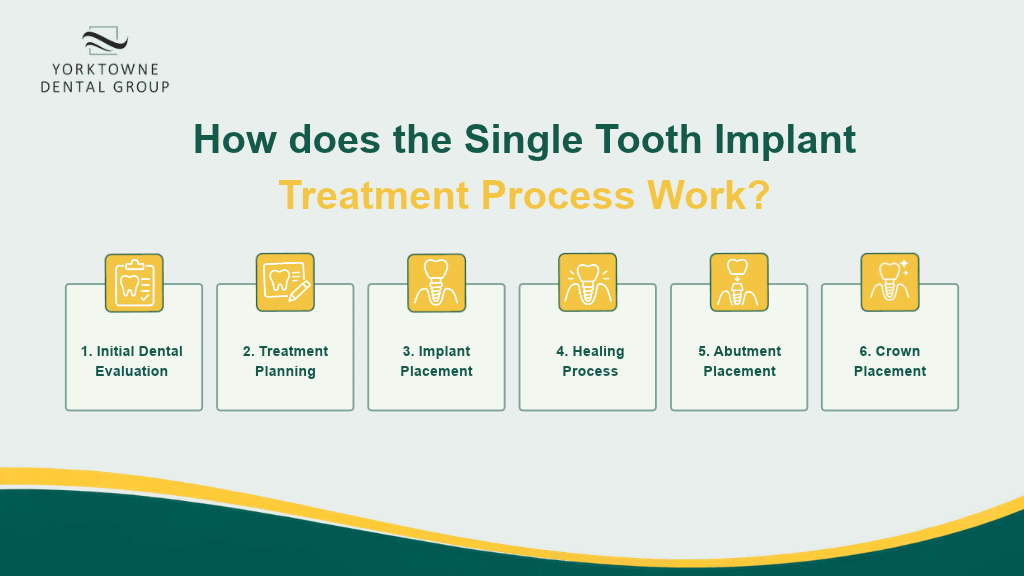
Single Tooth Implant follows targeted stages with Dental Implants to replace missing teeth plus restore function. Each stage is carefully completed to support a stable and natural-looking result.
1. Initial Dental Evaluation
- Assess Oral Health: The dentist examines your teeth and gums.
- Review Implant Needs: Evaluate the missing tooth area for implants or Dental veneers.
2. Treatment Planning
- Create a Personalized Plan: The treatment is planned based on your dental needs.
- Discuss Treatment Steps: Your dentist explains the procedure and expected timeline.
3. Implant Placement
- Place the Implant: The dental implant is positioned into the jawbone.
- Protect the Treatment Area: Proper care is advised during the healing period.
4. Healing Process
- Allow Healing: The implant needs time to integrate with the jawbone.
- Monitor Progress: Follow-up visits help assess healing and stability.
5. Abutment Placement
- Attach the Abutment: An abutment connects the implant to the replacement tooth.
- Prepare for Restoration: The area is prepared for the final dental crown.
6. Crown Placement
- Place the Crown: A custom crown is secured onto the implant.
- Restore Function*:* The completed crown matches your natural tooth shade or recent Teeth Whitening results.
Treatment plans vary based on bone density, ranging from single posts to full-arch All-On-X Dental Implants solutions. Your dentist will guide you through each stage and recommend appropriate care for long-term results.
How can you protect a Single Tooth Implant long term?
Single Tooth Implant can remain functional for many years with consistent oral care, regular dental visits, and healthy daily habits. Protecting the post helps maintain surrounding tissues while maximizing the long-term Benefits of Single Tooth Implant care.
Daily care
- Brush twice daily: Clean around the implant gently with a soft-bristled toothbrush.
- Clean between teeth: Use floss or an interdental brush to remove plaque around the implant.
- Avoid damaging habits: Do not use the implant to bite hard objects or chew very hard foods.
Follow-up and healthy habits
- Attend regular checkups: Let your dentist monitor the implant and surrounding tissues.
- Maintain healthy gums: Treat signs of bleeding, swelling, or tenderness promptly.
- Avoid tobacco use: Smoking can increase the risk of gum problems around the implant.
- Follow dentist recommendations: Keep up with professional cleanings and personalized implant-care instructions.
Consistent care helps reduce plaque buildup and protect the tissues around the implant. Regular dental checkups can catch problems early and support long-term stability.
Which Foods should I eat and avoid after a Single Tooth Implant?
After a Single Tooth Implant, soft foods can support healing and reduce pressure on the treated area. Slowly return to regular foods as healing improves and your dentist recommends.
Foods to choose first
- Soft foods: Yogurt, eggs, oatmeal, and mashed potatoes.
- Protein foods: Soft fish, eggs, and cottage cheese.
- Cool foods: Choose cool or lukewarm options.
Foods and habits to avoid
- Hard foods: Nuts, chips, and hard candy.
- Hot or spicy foods: Avoid during early healing.
- Smoking and chewing: Avoid smoking and chewing on the implant side.
These choices keep the treatment area comfortable during initial healing. Gradually add firmer foods based on your dentist’s advice to ensure optimal Single Tooth Implant Before After Results.
Single Tooth Implant: Key Facts
| Aspect | Details |
|---|---|
| Purpose | Replaces one missing tooth |
| Structure | Includes a post, abutment, and crown |
| Support | Anchored into the jawbone |
| Stability | Provides strong and secure support |
| Appearance | Designed to look like a natural tooth |
| Function | Restores biting and chewing ability |
| Care | Requires regular brushing and flossing |
| Durability | Can provide long-term results with proper care |
Conclusion
A Single Tooth Implant provides a stable way to replace a missing tooth while supporting chewing, speech, confidence, plus natural alignment. Treatment typically involves an implant post, abutment, plus a custom crown planned according to your specific oral health needs.
A thorough dental evaluation determines if an implant is right for you. Understanding healing, food choices, plus daily care helps you prepare for recovery. Knowing the differences between bridges plus implants ensures long-term success.
Yorktowne Dental Group can assess your smile and determine if a Single Tooth Implant fits your goals. Contact us today to discuss personalized care options and guide you through restoring a missing tooth. Book Free Consultation with our team to get started.
Frequently Asked Questions
1. Is a single-tooth implant painful?
Anesthesia numbs the area during surgery. Mild soreness or swelling can occur during recovery.
2. How long does this single-tooth dental implant treatment take?
Treatment often takes several months because the implant needs time to integrate before the crown is attached.
3. Am I a good candidate for a single-tooth implant?
Your dentist will evaluate bone, gums, bite, hygiene, health history, and other factors.
4. Can I eat normally after implant treatment?
After healing, many patients return to a regular diet. Follow soft-food instructions during early healing.
5. How long can an implant last?
With good oral hygiene, regular dental visits, and healthy habits, implants can provide long-term service.